

Lait de coco - Aroy d - 400 ml
Barcode: 0016229001919 (EAN / EAN-13) 016229001919 (UPC / UPC-A)
Common name: Lait de coco pour dessert
Quantity: 400 ml
Packaging: Canned
Brands: Aroy d
Categories: Plant-based foods and beverages, Beverages, Plant-based foods, Dairy substitutes, Milk substitutes, Plant-based beverages, Plant-based milk alternatives, Plant-based creams, Plant-based creams for cooking, Coconut milks and creams
Origin of ingredients: Thailand
Countries where sold: France
Matching with your preferences
Health
Ingredients


Food processing
-

Ultra processed foods
Elements that indicate the product is in the 4 - Ultra processed food and drink products group:
- Additive: E435 - Polyoxyethylene sorbitan monostearate
- Ingredient: Emulsifier
Food products are classified into 4 groups according to their degree of processing:
- Unprocessed or minimally processed foods
- Processed culinary ingredients
- Processed foods
- Ultra processed foods
The determination of the group is based on the category of the product and on the ingredients it contains.
Additives
Ingredients analysis
-

Palm oil free
No ingredients containing palm oil detected
-

Maybe vegan
Ingredients that may not be vegan: E435
-

Maybe vegetarian
Ingredients that may not be vegetarian: E435
-

Details of the analysis of the ingredients
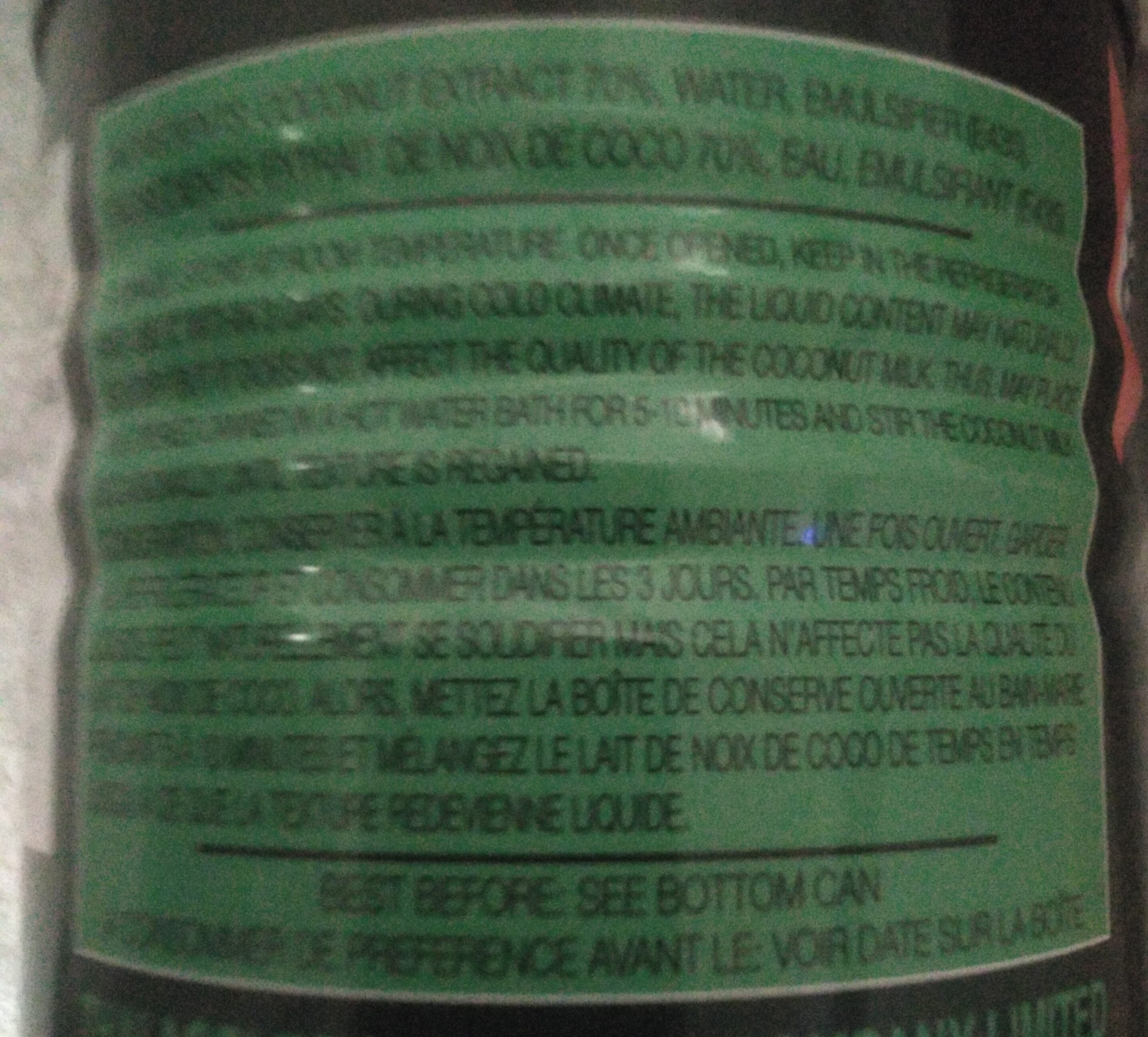
: noix de coco 70%, eau, emulsifiant (e435)- noix de coco -> en:coconut - vegan: yes - vegetarian: yes - ciqual_proxy_food_code: 15006 - percent_min: 70 - percent: 70 - percent_max: 70
- eau -> en:water - vegan: yes - vegetarian: yes - ciqual_food_code: 18066 - percent_min: 15 - percent_max: 30
- emulsifiant -> en:emulsifier - percent_min: 0 - percent_max: 15
- e435 -> en:e435 - vegan: maybe - vegetarian: maybe - percent_min: 0 - percent_max: 15
Nutrition
-

Average nutritional quality
⚠ ️Warning: the amount of fiber is not specified, their possible positive contribution to the grade could not be taken into account.⚠ ️Warning: the amount of fruits, vegetables and nuts is not specified on the label, it was estimated from the list of ingredients: 70This product is not considered a beverage for the calculation of the Nutri-Score.
Positive points: 2
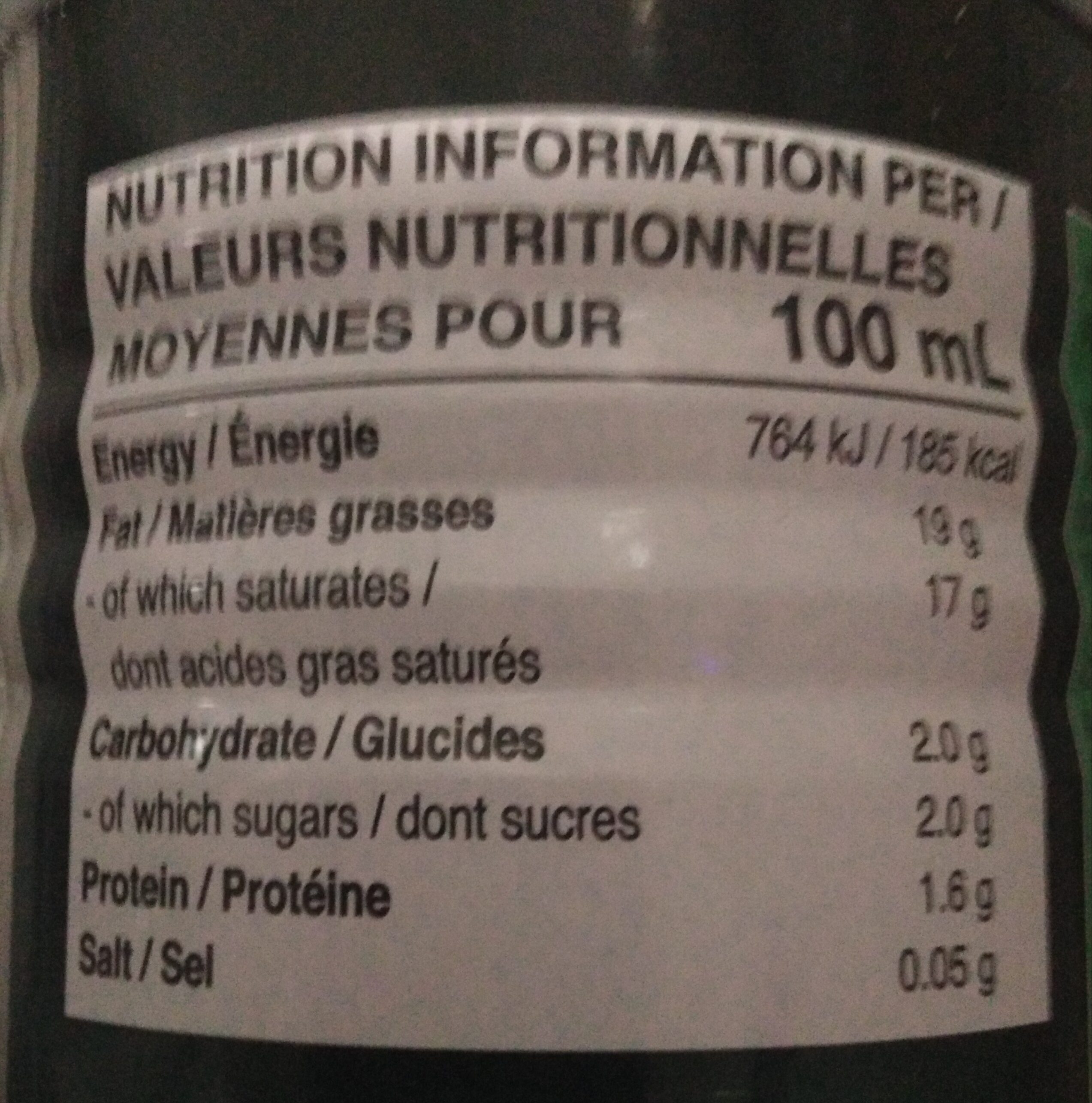
- Proteins: 0 / 5 (value: 1.6, rounded value: 1.6)
- Fiber: 0 / 5 (value: 0, rounded value: 0)
- Fruits, vegetables, nuts, and colza/walnut/olive oils: 2 / 5 (value: 70, rounded value: 70)
Negative points: 12
- Energy: 2 / 10 (value: 764, rounded value: 764)
- Sugars: 0 / 10 (value: 2, rounded value: 2)
- Saturated fat: 10 / 10 (value: 17, rounded value: 17)
- Sodium: 0 / 10 (value: 20, rounded value: 20)
The points for proteins are not counted because the negative points are greater or equal to 11.
Nutritional score: (12 - 2)
Nutri-Score:
-

Nutrient levels
-

Fat in high quantity (19%)
What you need to know- A high consumption of fat, especially saturated fats, can raise cholesterol, which increases the risk of heart diseases.
Recommendation: Limit the consumption of fat and saturated fat- Choose products with lower fat and saturated fat content.
-
Saturated fat in high quantity (17%)
What you need to know- A high consumption of fat, especially saturated fats, can raise cholesterol, which increases the risk of heart diseases.
Recommendation: Limit the consumption of fat and saturated fat- Choose products with lower fat and saturated fat content.
-

Sugars in low quantity (2%)
What you need to know- A high consumption of sugar can cause weight gain and tooth decay. It also augments the risk of type 2 diabetes and cardio-vascular diseases.
Recommendation: Limit the consumption of sugar and sugary drinks- Sugary drinks (such as sodas, fruit beverages, and fruit juices and nectars) should be limited as much as possible (no more than 1 glass a day).
- Choose products with lower sugar content and reduce the consumption of products with added sugars.
-
Salt in low quantity (0.05%)
What you need to know- A high consumption of salt (or sodium) can cause raised blood pressure, which can increase the risk of heart disease and stroke.
- Many people who have high blood pressure do not know it, as there are often no symptoms.
- Most people consume too much salt (on average 9 to 12 grams per day), around twice the recommended maximum level of intake.
Recommendation: Limit the consumption of salt and salted food- Reduce the quantity of salt used when cooking, and don't salt again at the table.
- Limit the consumption of salty snacks and choose products with lower salt content.
-


Environment
-

Eco-Score C - Moderate environmental impact
⚠ ️Select a country in order to include the full impact of transportation.The Eco-Score is an experimental score that summarizes the environmental impacts of food products.→ The Eco-Score was initially developped for France and it is being extended to other European countries. The Eco-Score formula is subject to change as it is regularly improved to make it more precise and better suited to each country.Life cycle analysis
-

Average impact of products of the same category: B (Score: 78/100)
Category: Coconut milk or coconut cream
Category: Coconut milk or coconut cream
- PEF environmental score: 0.06 (the lower the score, the lower the impact)
- including impact on climate change: 0.51 kg CO2 eq/kg of product
Stage Impact  Agriculture
30.3 %
Agriculture
30.3 % Processing
10.1 %
Processing
10.1 % Packaging
15.8 %
Packaging
15.8 % Transportation
27.0 %
Transportation
27.0 % Distribution
13.1 %
Distribution
13.1 % Consumption
3.9 %
Consumption
3.9 %
Bonuses and maluses
-

Origins of ingredients with a high impact
Malus: -5
Environmental policy: -5
Transportation: 0
Origin of the product and/or its ingredients % of ingredients Impact Thailand 100 %High
-
Packaging with a high impact
Malus: -15
Shape Material Recycling Impact 1 Food can Metal Recycle High Box Metal Recycle High ⚠ ️ The information about the packaging of this product is not sufficiently precise (exact shapes and materials of all components of the packaging).⚠ ️ For a more precise calculation of the Eco-Score, you can modify the product page and add them.
If you are the manufacturer of this product, you can send us the information with our free platform for producers.
Eco-Score for this product
-
Impact for this product: C (Score: 58/100)
Product: Lait de coco - Aroy d - 400 ml
Life cycle analysis score: 78
Sum of bonuses and maluses: -20
Final score: 58/100
-

Carbon footprint
-

Equal to driving 0.3 km in a petrol car
51 g CO² per 100g of product
The carbon emission figure comes from ADEME's Agribalyse database, for the category: Coconut milk or coconut cream (Source: ADEME Agribalyse Database)
Stage Impact
Agriculture
13.8 %
Processing
17.4 %
Packaging
19.7 %
Transportation
41.4 %
Distribution
6.5 %
Consumption
1.3 %
Packaging
-
Packaging with a high impact
-
Packaging parts
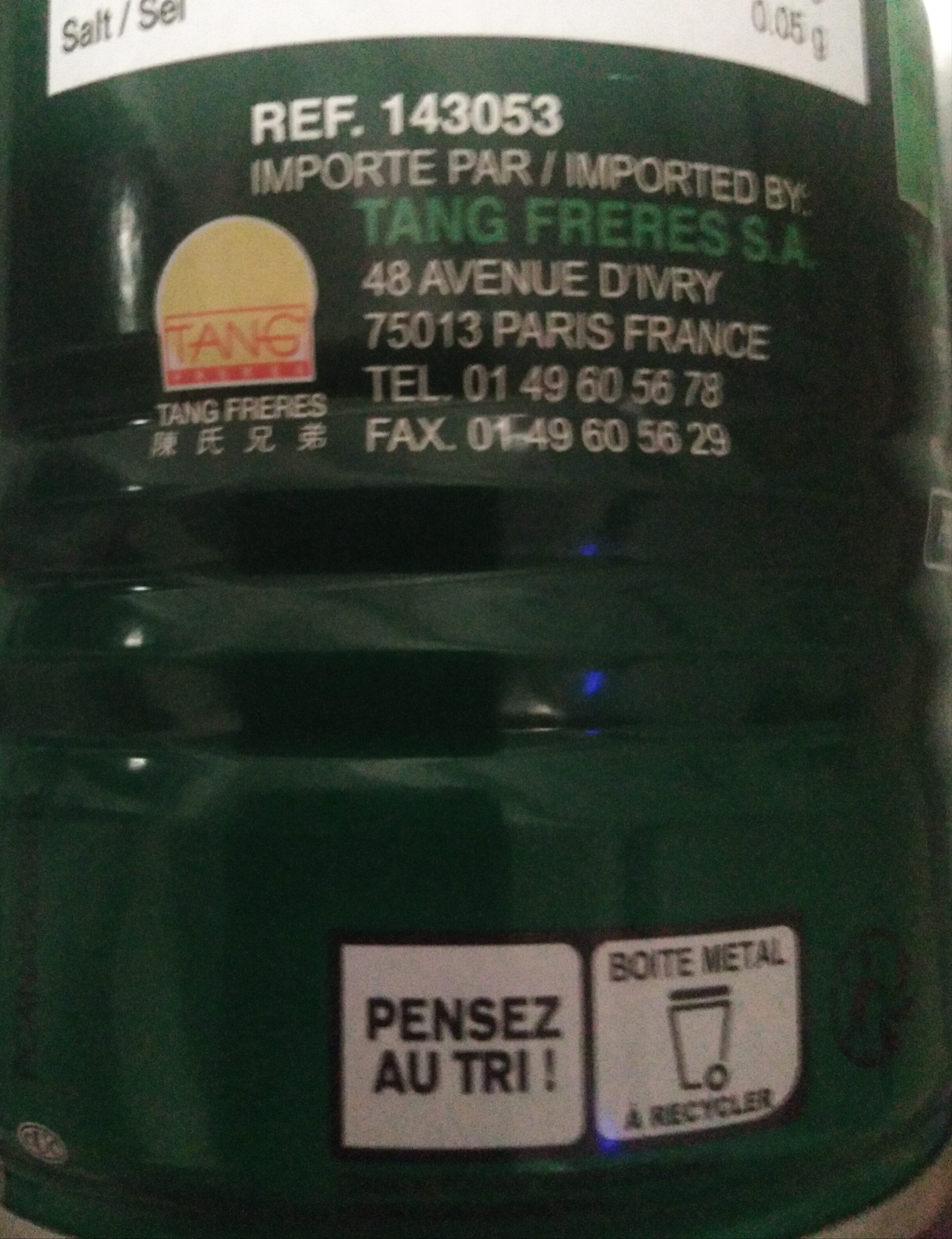
 1 x Food can 400ml (Metal)
Box (Metal)
-
Transportation
-
Origins of ingredients
Origins of ingredients with a high impact
Origin of the product and/or its ingredients % of ingredients Impact Thailand 100 %High

Data sources
Product added on by openfoodfacts-contributors
Last edit of product page on by alexg.
Product page also edited by autorotate-bot, date-limite-app, kiliweb, manu1400, packbot, rivdepar, upcbot, yuka.sY2b0xO6T85zoF3NwEKvllN8VNbsiC3JbzjvmVPbm_zWCbrsa8xUzbXCH6s.