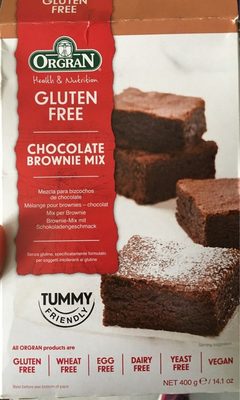
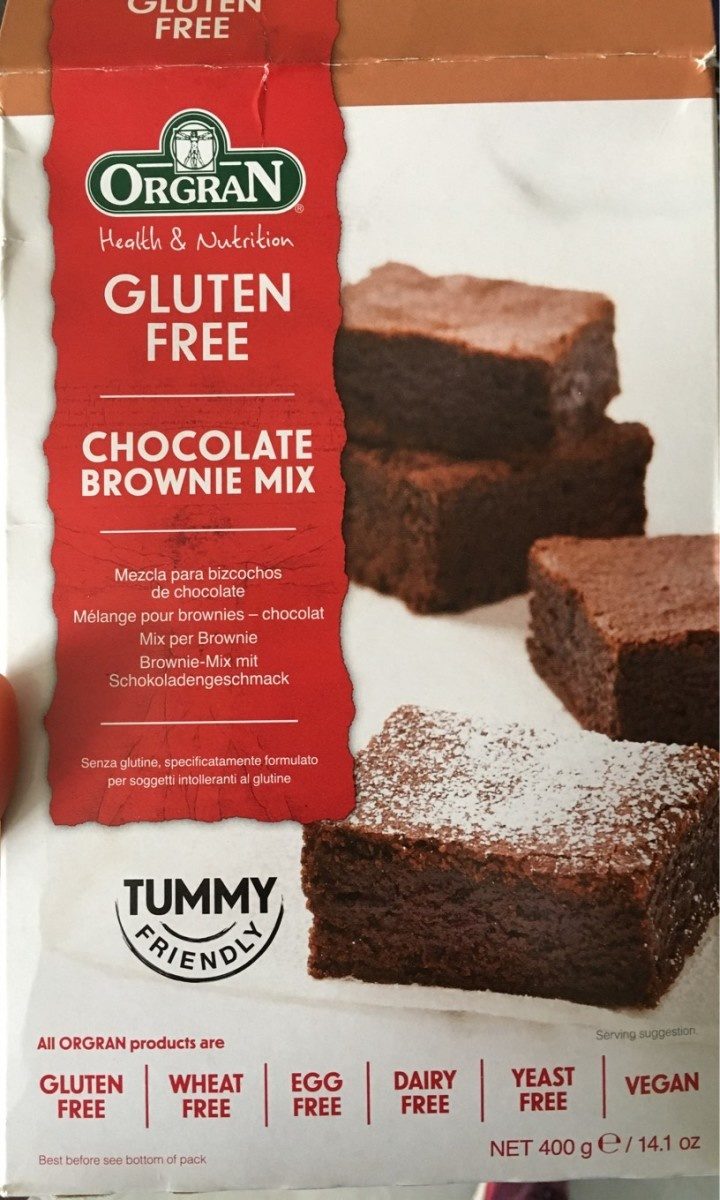
Chocolate Brownie Mix - Orgran - 400 g
This product page is not complete. You can help to complete it by editing it and adding more data from the photos we have, or by taking more photos using the app for Android or iPhone/iPad. Thank you!
×
Barcode: 0720516022739 (EAN / EAN-13) 720516022739 (UPC / UPC-A)
Quantity: 400 g
Brands: Orgran
Categories: Snacks, Sweet snacks, Biscuits and cakes, Cakes, Cooking helpers, Dessert mixes, Pastry helpers, Baking Mixes, Cake mixes
Labels, certifications, awards: No gluten, Vegetarian, Kosher, No artificial flavors, No GMOs, No preservatives, Vegan, No added MSG, No artificial colors, No artificial colours or flavours, No eggs, No milk, No soy, No wheat, Australian-owned, Endorsed-by-coeliac-australia-nz, Fodmap-friendly, Yeast-free
Manufacturing or processing places: Australia
Matching with your preferences
Health
Ingredients


Food processing
-

Ultra processed foods
Elements that indicate the product is in the 4 - Ultra processed food and drink products group:
- Additive: E412 - Guar gum
- Additive: E461 - Methyl cellulose
Food products are classified into 4 groups according to their degree of processing:
- Unprocessed or minimally processed foods
- Processed culinary ingredients
- Processed foods
- Ultra processed foods
The determination of the group is based on the category of the product and on the ingredients it contains.
Additives
Ingredients analysis
-

Palm oil free
No ingredients containing palm oil detected
Unrecognized ingredients: fr:gomme-vegetaleSome ingredients could not be recognized.
We need your help!
You can help us recognize more ingredients and better analyze the list of ingredients for this product and others:
- Edit this product page to correct spelling mistakes in the ingredients list, and/or to remove ingredients in other languages and sentences that are not related to the ingredients.
- Add new entries, synonyms or translations to our multilingual lists of ingredients, ingredient processing methods, and labels.
If you would like to help, join the #ingredients channel on our Slack discussion space and/or learn about ingredients analysis on our wiki. Thank you!
-

Vegan
No non-vegan ingredients
Unrecognized ingredients: fr:gomme-vegetaleSome ingredients could not be recognized.
We need your help!
You can help us recognize more ingredients and better analyze the list of ingredients for this product and others:
- Edit this product page to correct spelling mistakes in the ingredients list, and/or to remove ingredients in other languages and sentences that are not related to the ingredients.
- Add new entries, synonyms or translations to our multilingual lists of ingredients, ingredient processing methods, and labels.
If you would like to help, join the #ingredients channel on our Slack discussion space and/or learn about ingredients analysis on our wiki. Thank you!
-

Vegetarian
No non-vegetarian ingredients detected
Unrecognized ingredients: fr:gomme-vegetaleSome ingredients could not be recognized.
We need your help!
You can help us recognize more ingredients and better analyze the list of ingredients for this product and others:
- Edit this product page to correct spelling mistakes in the ingredients list, and/or to remove ingredients in other languages and sentences that are not related to the ingredients.
- Add new entries, synonyms or translations to our multilingual lists of ingredients, ingredient processing methods, and labels.
If you would like to help, join the #ingredients channel on our Slack discussion space and/or learn about ingredients analysis on our wiki. Thank you!
-

Details of the analysis of the ingredients
We need your help!
Some ingredients could not be recognized.
We need your help!
You can help us recognize more ingredients and better analyze the list of ingredients for this product and others:
- Edit this product page to correct spelling mistakes in the ingredients list, and/or to remove ingredients in other languages and sentences that are not related to the ingredients.
- Add new entries, synonyms or translations to our multilingual lists of ingredients, ingredient processing methods, and labels.
If you would like to help, join the #ingredients channel on our Slack discussion space and/or learn about ingredients analysis on our wiki. Thank you!
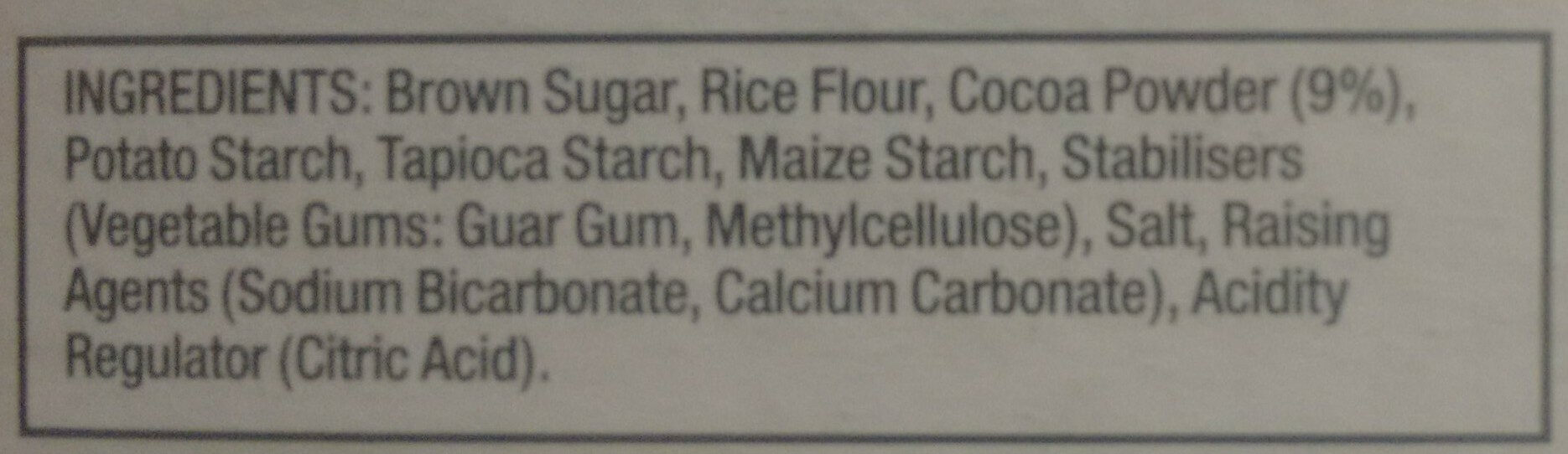
: Sucre brun, Farine de riz, Poudre de cacao 9%, Fécule de pomme de terre, Amidon de tapioca, Amidon de maïs, Gomme végétale (stabilisant, gomme de guar), Méthylcellulose, Sel, Poudres à lever (Bicarbonate de soude), Carbonate de calcium, Régulateur de l'acidité (Acide citrique)- Sucre brun -> en:caramelised-sugar - vegan: yes - vegetarian: yes - ciqual_proxy_food_code: 31016 - percent_min: 9 - percent_max: 82
- Farine de riz -> en:rice-flour - vegan: yes - vegetarian: yes - ciqual_food_code: 9520 - percent_min: 9 - percent_max: 45.5
- Poudre de cacao -> en:cocoa-powder - vegan: yes - vegetarian: yes - ciqual_food_code: 18100 - percent_min: 9 - percent: 9 - percent_max: 9
- Fécule de pomme de terre -> en:potato-starch - vegan: yes - vegetarian: yes - ciqual_proxy_food_code: 9510 - percent_min: 0 - percent_max: 9
- Amidon de tapioca -> en:tapioca - vegan: yes - vegetarian: yes - ciqual_proxy_food_code: 9510 - percent_min: 0 - percent_max: 9
- Amidon de maïs -> en:corn-starch - vegan: yes - vegetarian: yes - ciqual_food_code: 9510 - percent_min: 0 - percent_max: 9
- Gomme végétale -> fr:gomme-vegetale - percent_min: 0 - percent_max: 9
- stabilisant -> en:stabiliser - percent_min: 0 - percent_max: 9
- gomme de guar -> en:e412 - vegan: yes - vegetarian: yes - percent_min: 0 - percent_max: 4.5
- Méthylcellulose -> en:e461 - vegan: yes - vegetarian: yes - percent_min: 0 - percent_max: 9
- Sel -> en:salt - vegan: yes - vegetarian: yes - ciqual_food_code: 11058 - percent_min: 0 - percent_max: 0.43434
- Poudres à lever -> en:raising-agent - percent_min: 0 - percent_max: 0.43434
- Bicarbonate de soude -> en:e500ii - vegan: yes - vegetarian: yes - percent_min: 0 - percent_max: 0.43434
- Carbonate de calcium -> en:e170i - vegan: maybe - vegetarian: maybe - percent_min: 0 - percent_max: 0.43434
- Régulateur de l'acidité -> en:acidity-regulator - percent_min: 0 - percent_max: 0.43434
- Acide citrique -> en:e330 - vegan: yes - vegetarian: yes - percent_min: 0 - percent_max: 0.43434



Environment
-

Eco-Score not computed - Unknown environmental impact
We could not compute the Eco-Score of this product as it is missing some data, could you help complete it?Could you add a precise product category so that we can compute the Eco-Score? Add a category
Packaging
-

Packaging with a medium impact
-
Packaging parts
 (Plastic)
(Cardboard)
-
Transportation
-

Origins of ingredients
Missing origins of ingredients information
⚠ ️ The origins of the ingredients of this product are not indicated.
If they are indicated on the packaging, you can modify the product sheet and add them.
If you are the manufacturer of this product, you can send us the information with our free platform for producers.Add the origins of ingredients for this product Add the origins of ingredients for this product

Data sources
Product added on by kiliweb
Last edit of product page on by packbot.
Product page also edited by daviewales, openfoodfacts-contributors, yuka.YXFjNFNMd0l0L05YbXNWanh6RHU0b2xPL0lMMVRENmxBTWdUSVE9PQ.