Help us promote biodiversity in Open Food Facts!
Could you spare a few minutes to answer our survey on a new feature we are developing as part of the European project DIVINFOOD to promote agrobiodiversity in the food we eat?
DIVINFOOD has been funded from the European Union’s Horizon 2020 research and innovation programme under the Grant Agreement N°101000383
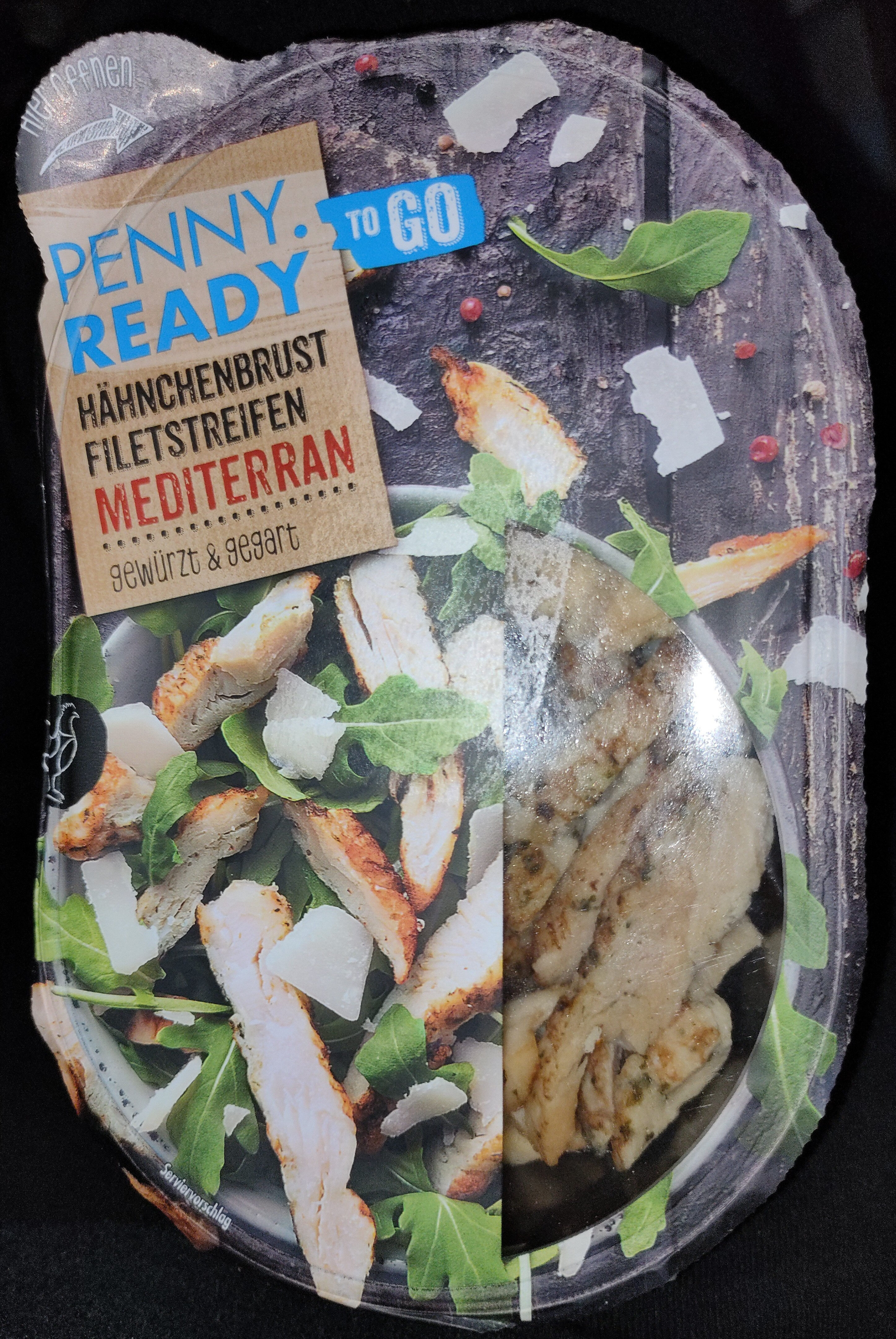
Hähnchenbrust Filetstreifen - Mediterran – Penny Ready – 150g
Ambiguous barcode: This product has a Restricted Circulation Number barcode for products within a company. This means that different producers and stores can use the same barcode for different products.
×
This product page is not complete. You can help to complete it by editing it and adding more data from the photos we have, or by taking more photos using the app for Android or iPhone/iPad. Thank you!
×
Barcode:
28427711
Barcode:
28427711
Quantity: 150g
Packaging: Plastic
Brands: Penny Ready
Categories: Meats and their products, Meats, Chicken and its products, Poultries, Chickens, Chicken breasts, de:Hähnchenbrustfilet in Streifen
Traceability code: DE ST 01782 EG
Stores: Penny
Countries where sold: Germany
Matching with your preferences
Health
Nutrition
-
Nutri-Score E
Lower nutritional quality
⚠ ️Warning: the nutrition facts are not specified. They have been estimated from the list of ingredients.⚠ ️Warning: the amount of fruits, vegetables and nuts is not specified on the label, it was estimated from the list of ingredients: 23-
Discover the new Nutri-Score!
The computation of the Nutri-Score is evolving to provide better recommendations based on the latest scientific evidence.
Main improvements:
- Better score for some fatty fish and oils rich in good fats
- Better score for whole products rich in fiber
- Worse score for products containing a lot of salt or sugar
- Worse score for red meat (compared to poultry)
-
What is the Nutri-Score?
The Nutri-Score is a logo on the overall nutritional quality of products.
The score from A to E is calculated based on nutrients and foods to favor (proteins, fiber, fruits, vegetables and legumes ...) and nutrients to limit (calories, saturated fat, sugars, salt). The score is calculated from the data of the nutrition facts table and the composition data (fruits, vegetables and legumes).
Negative points: 22/55
-
Energy
4/10 points (1591.97kJ)
Energy intakes above energy requirements are associated with increased risks of weight gain, overweight, obesity, and consequently risk of diet-related chronic diseases.
-
Sugar
1/15 points (5.61g)
A high consumption of sugar can cause weight gain and tooth decay. It also augments the risk of type 2 diabetes and cardio-vascular diseases.
-
Saturated fat
3/10 points (3.16g)
A high consumption of fat, especially saturated fats, can raise cholesterol, which increases the risk of heart diseases.
-
Salt
14/20 points (2.97g)
A high consumption of salt (or sodium) can cause raised blood pressure, which can increase the risk of heart disease and stroke.
Positive points: 0/10
-
Fiber
0/5 points (0.09g)
Consuming foods rich in fiber (especially whole grain foods) reduces the risks of aerodigestive cancers, cardiovascular diseases, obesity and diabetes.
-
Fruits, vegetables and legumes
0/5 points (0.7%)
Consuming foods rich in fruits, vegetables and legumes reduces the risks of aerodigestive cancers, cardiovascular diseases, obesity and diabetes.
-
Details of the calculation of the Nutri-Score
⚠ ️Warning: the nutrition facts are not specified. They have been estimated from the list of ingredients.⚠ ️Warning: the amount of fruits, vegetables and nuts is not specified on the label, it was estimated from the list of ingredients: 23This product is not considered a beverage for the calculation of the Nutri-Score.
Points for proteins are not counted because the negative points greater than or equal to 11.
Nutritional score: 22 (22 - 0)
Nutri-Score: E
-
-
Nutrition facts
Nutrition facts As sold
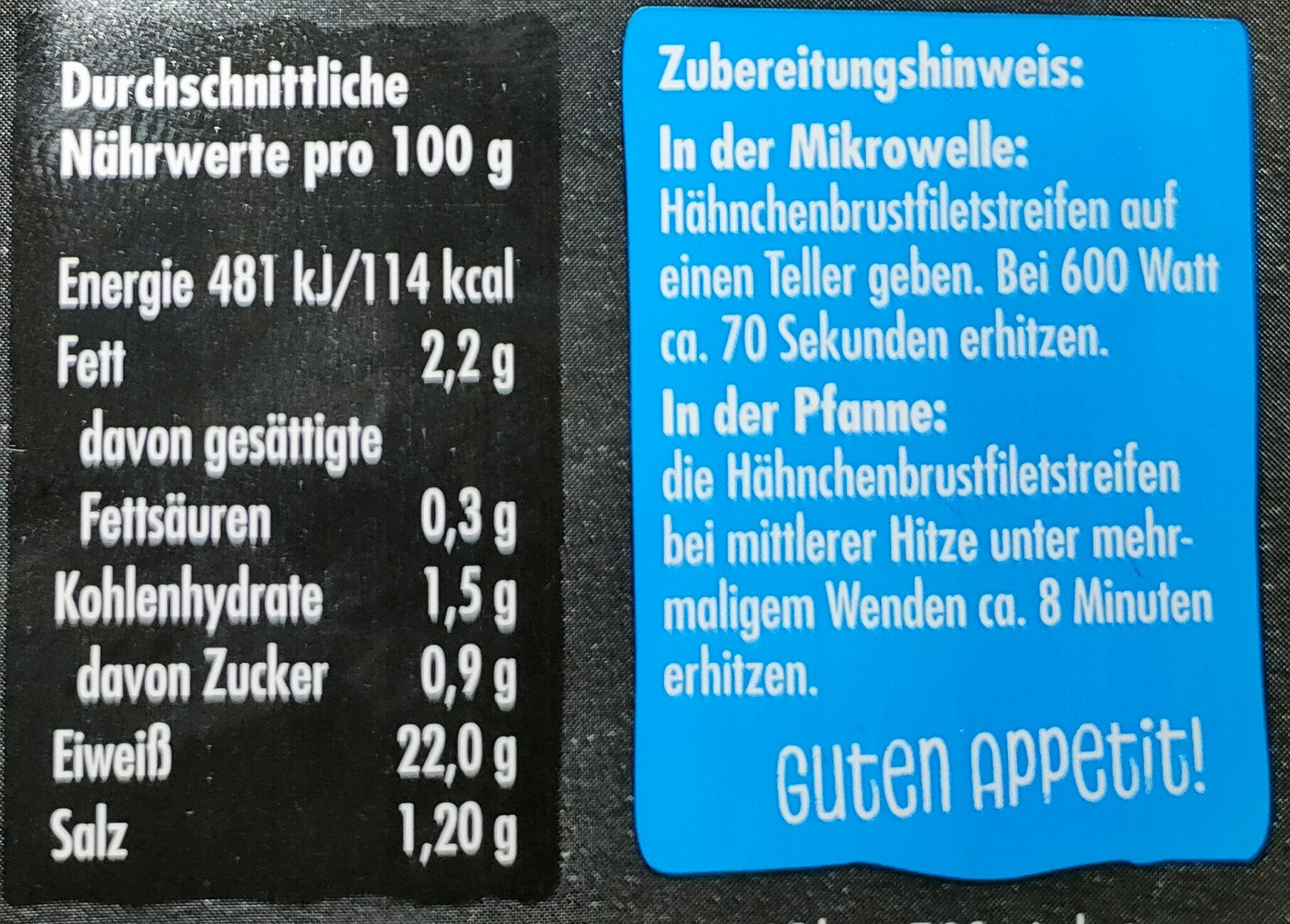
for 100 g / 100 mlCompared to: Chicken breasts Energy ? 541.352 kj (128 kcal) Fat ? 2.606 g Saturated fat ? 0.598 g Carbohydrates ? 2.893 g Sugars ? 0.379 g Fiber ? 0.193 g Proteins ? 22.436 g Salt ? 0.917 g Fruits‚ vegetables‚ legumes ? 0.068 % -
Nutrition facts (Detailed data)
Nutrition facts As sold
for 100 g / 100 mlAs sold for 100 g (packaging) Energy ? ? Fat ? ? Saturated fat ? ? Carbohydrates ? ? Sugars ? ? Fiber ? ? Proteins ? ? Salt ? ? Fruits‚ vegetables‚ legumes ? ?
-
Ingredients
-
12 ingredients
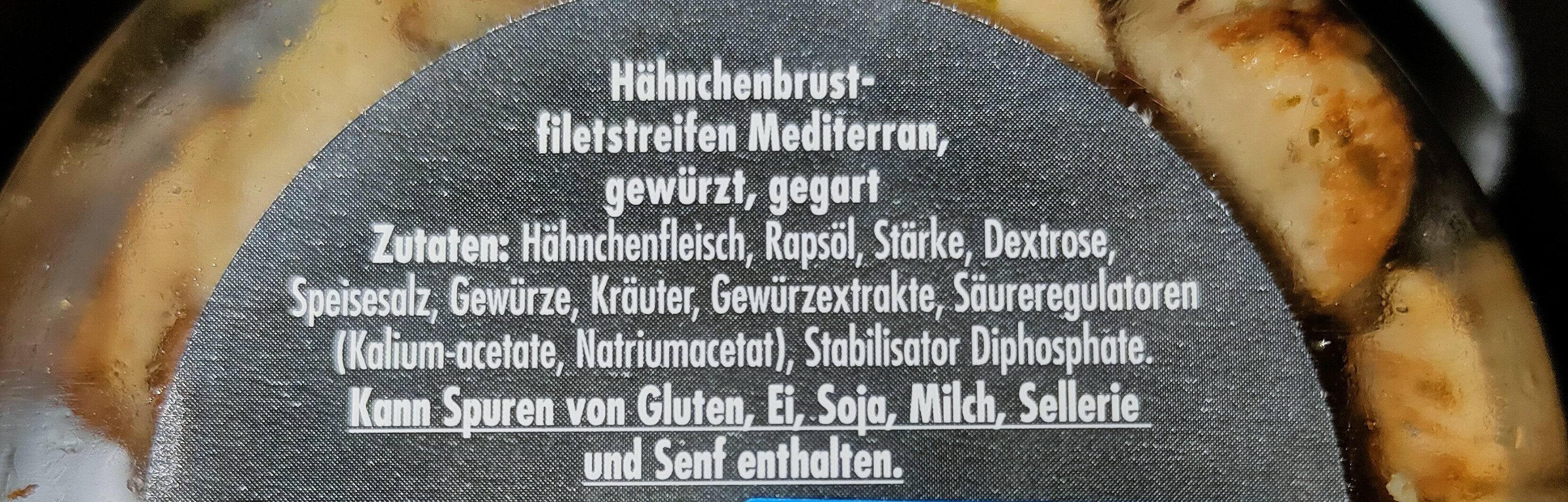
German: Hähnchenfleisch, Rapsöl, Stärke, Dextrose, Speisesalz, Gewürze, Kräuter, Gewürzextrakte, Säureregulatoren (Kaliumacetate, Natriumacetat), Stabilisator Diphosphate.Traces: Celery, Eggs, Gluten, Milk, Mustard, Soybeans-
Ingredient information
-
Hähnchenfleisch: 55.0% (estimate)
-
Rapeseed oil: 22.5% (estimate)
-
Starch: 11.2% (estimate)
-
Dextrose: 5.6% (estimate)
-
Salt: 2.8% (estimate)
-
Spice: < 2% (estimate)
-
Herb: < 2% (estimate)
-
Spice extract: < 2% (estimate)
-
Acidity regulator: < 2% (estimate)
-
— E261: < 2% (estimate)
-
— E262i: < 2% (estimate)
-
E450-stabilizer: < 2% (estimate)
-
-
-
Contains added sugars (~ 5%)
Added sugars: Dextrose
Estimated quantity of added sugars in ingredients: 5%Search for products in the same category without added sugars: Chicken breastsWhat you need to know- A high consumption of sugar can cause weight gain and tooth decay. It also augments the risk of type 2 diabetes and cardio-vascular diseases.
Recommendation: Limit the consumption of sugar and sugary drinks- Sugary drinks (such as sodas, fruit beverages, and fruit juices and nectars) should be limited as much as possible (no more than 1 glass a day).
- Choose products with lower sugar content and reduce the consumption of products with added sugars.
Food processing
-
Ultra-processed foods
2 ultra-processing markers
-
Limit ultra-processed foods
Limiting ultra-processed foods reduces the risk of noncommunicable chronic diseases
Several studies have found that a lower consumption of ultra-processed foods is associated with a reduced risk of noncommunicable chronic diseases, such as obesity, hypertension and diabetes.
Source: Ultra-processed foods increase noncommunicable chronic disease risk
Elements that indicate the product is in the 4 - Ultra processed food and drink products group:
- Ingredient: Dextrose
- Ingredient: Glucose
Food products are classified into 4 groups according to their degree of processing:
- Unprocessed or minimally processed foods
- Processed culinary ingredients
- Processed foods
- Ultra-processed foods
The determination of the group is based on the category of the product and on the ingredients it contains.
-
Additives
-
E261 - Potassium acetate
Potassium acetate: Potassium acetate -KCH3COO- is the potassium salt of acetic acid.Source: Wikipedia
-
E262 - Sodium acetates
Sodium acetate: Sodium acetate, CH3COONa, also abbreviated NaOAc, is the sodium salt of acetic acid. This colorless deliquescent salt has a wide range of uses.Source: Wikipedia
-
E262i - Sodium acetate
Sodium acetate: Sodium acetate, CH3COONa, also abbreviated NaOAc, is the sodium salt of acetic acid. This colorless deliquescent salt has a wide range of uses.Source: Wikipedia
Ingredients analysis
-
Palm oil free
No ingredients containing palm oil detected
-
Non-vegan
Non-vegan ingredients: de:Hähnchenfleisch
-
Non-vegetarian
Non-vegetarian ingredients: de:Hähnchenfleisch
-
Details of the analysis of the ingredients
We need your help!
Some ingredients could not be recognized.
We need your help!
You can help us recognize more ingredients and better analyze the list of ingredients for this product and others:
- Edit this product page to correct spelling mistakes in the ingredients list, and/or to remove ingredients in other languages and sentences that are not related to the ingredients.
- Add new entries, synonyms or translations to our multilingual lists of ingredients, ingredient processing methods, and labels.
If you would like to help, join the #ingredients channel on our Slack discussion space and/or learn about ingredients analysis on our wiki. Thank you!
de: Hähnchenfleisch, Rapsöl, Stärke, Dextrose, Speisesalz, Gewürze, Kräuter, Gewürzextrakte, Säureregulatoren (Kaliumacetate, Natriumacetat), Stabilisator Diphosphate- Hähnchenfleisch -> de:hähnchenfleisch – vegan: no – vegetarian: no – ciqual_food_code: 36005 – percent_min: 10 – percent_estimate: 55 – percent_max: 100
- Rapsöl -> en:rapeseed-oil – vegan: yes – vegetarian: yes – from_palm_oil: no – ciqual_food_code: 17130 – percent_min: 0 – percent_estimate: 22.5 – percent_max: 50
- Stärke -> en:starch – vegan: yes – vegetarian: yes – ciqual_proxy_food_code: 9510 – percent_min: 0 – percent_estimate: 11.25 – percent_max: 33.3333333333333
- Dextrose -> en:dextrose – vegan: yes – vegetarian: yes – ciqual_proxy_food_code: 31016 – percent_min: 0 – percent_estimate: 5.625 – percent_max: 25
- Speisesalz -> en:salt – vegan: yes – vegetarian: yes – ciqual_food_code: 11058 – percent_min: 0 – percent_estimate: 2.8125 – percent_max: 20
- Gewürze -> en:spice – vegan: yes – vegetarian: yes – percent_min: 0 – percent_estimate: 1.40625 – percent_max: 16.6666666666667
- Kräuter -> en:herb – vegan: yes – vegetarian: yes – percent_min: 0 – percent_estimate: 0.703125 – percent_max: 14.2857142857143
- Gewürzextrakte -> en:spice-extract – vegan: yes – vegetarian: yes – percent_min: 0 – percent_estimate: 0.3515625 – percent_max: 12.5
- Säureregulatoren -> en:acidity-regulator – percent_min: 0 – percent_estimate: 0.17578125 – percent_max: 11.1111111111111
- Kaliumacetate -> en:e261 – vegan: yes – vegetarian: yes – percent_min: 0 – percent_estimate: 0.087890625 – percent_max: 11.1111111111111
- Natriumacetat -> en:e262i – vegan: yes – vegetarian: yes – percent_min: 0 – percent_estimate: 0.087890625 – percent_max: 5.55555555555556
- Stabilisator Diphosphate -> en:e450-stabilizer – vegan: yes – vegetarian: yes – percent_min: 0 – percent_estimate: 0.17578125 – percent_max: 10
Environment
-
Green-Score E
Very high environmental impact
⚠ ️Select a country in order to include the full impact of transportation.The Green-Score is an experimental score that summarizes the environmental impacts of food products.→ The Green-Score was initially developed for France and it is being extended to other European countries. The Green-Score formula is subject to change as it is regularly improved to make it more precise and better suited to each country.Life cycle analysis
-
Average impact of products of the same category: D (Score: 42/100)
Category: Chicken, meat and skin, raw
- PEF environmental score: 0.70 (the lower the score, the lower the impact)
- including impact on climate change: 5.52 kg CO2 eq/kg of product
Stage Impact Agriculture
82.7 %Processing
10.5 %Packaging
2.6 %Transportation
2.6 %Distribution
1.3 %Consumption
0.3 %
Bonuses and maluses
-
Missing origins of ingredients information
Malus: -5
⚠ ️ The origins of the ingredients of this product are not indicated.
If they are indicated on the packaging, you can modify the product sheet and add them.
If you are the manufacturer of this product, you can send us the information with our free platform for producers.
-
No ingredients that threaten species
-
Packaging with a medium impact
Malus: -10
Shape Material Recycling Impact Unknown Plastic High ⚠ ️ The information about the packaging of this product is not sufficiently precise (exact shapes and materials of all components of the packaging).⚠ ️ For a more precise calculation of the Green-Score, you can edit the product page and add them.
If you are the manufacturer of this product, you can send us the information with our free platform for producers.
Green-Score for this product
-
Impact for this product: E (Score: 27/100)
Product: Hähnchenbrust Filetstreifen - Mediterran – Penny Ready – 150g
Life cycle analysis score: 42
Sum of bonuses and maluses: -15
Final score: 27/100
-
Carbon footprint
-
Equal to driving 2.9 km in a petrol car
552 g CO₂e per 100g of product
The carbon emission figure comes from ADEME's Agribalyse database, for the category: Chicken, meat and skin, raw (Source: ADEME Agribalyse Database)
Stage Impact Agriculture
75.1 %Processing
14.9 %Packaging
5.0 %Transportation
4.2 %Distribution
0.7 %Consumption
0.1 %
Packaging
-
Packaging with a medium impact
-
Packaging parts
(Plastic) - In contact with food
-
Packaging materials
Material % Packaging weight Packaging weight per 100 g of product Plastic
-
Transportation
-
Origins of ingredients
Missing origins of ingredients information
⚠ ️ The origins of the ingredients of this product are not indicated.
If they are indicated on the packaging, you can modify the product sheet and add them.
If you are the manufacturer of this product, you can send us the information with our free platform for producers.Add the origins of ingredients for this product

-
Large forest footprint
High risk of deforestation
Ingredients requiring soy
The forest footprint is calculated by taking into account the ingredients whose production requires soybeans, the cultivation of which is linked to deforestation
Ingredient Type % in product Processing factor
(% of food after processing)Soy feed factor
(kg of soy per kg of food)Soy yield
(kg of soy per m²)Deforestation risk
(%)Forest footprint
(m² per kg of food)de:Hähnchenfleisch Poulet Importé 55.00 % 75 % 0.95 0.3145 71 % 1.57 Total forest footprint
1.57 m² per kg of food
Report a problem
-
Incomplete or incorrect information?
Category, labels, ingredients, allergens, nutritional information, photos etc.
If the information does not match the information on the packaging, you can complete or correct it. Thank you! Open Food Facts is a collaborative database, and every contribution is useful for all.If you want to report vandalism, inappropriate content or erroneous data you can't fix yourself, report it to our moderators team.
Data sources
Product added on by professordoc
Last edit of product page on by ecoscore-impact-estimator.
Product page also edited by openfoodfacts-contributors, packbot.