We still need €120,000 to finish 2026!
Become an Open Food Facts patron
Every month, we serve 8 million visitors, and many times that through the API. Your support is essential to:
-
keep Open Food Facts open & available to all,
- support infrastructure, the website, mobile app and API with a small permanent team
-
remain independent of the food industry,
-
support the community
-
support science
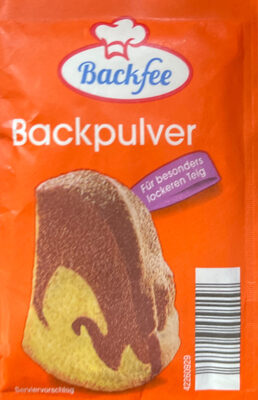
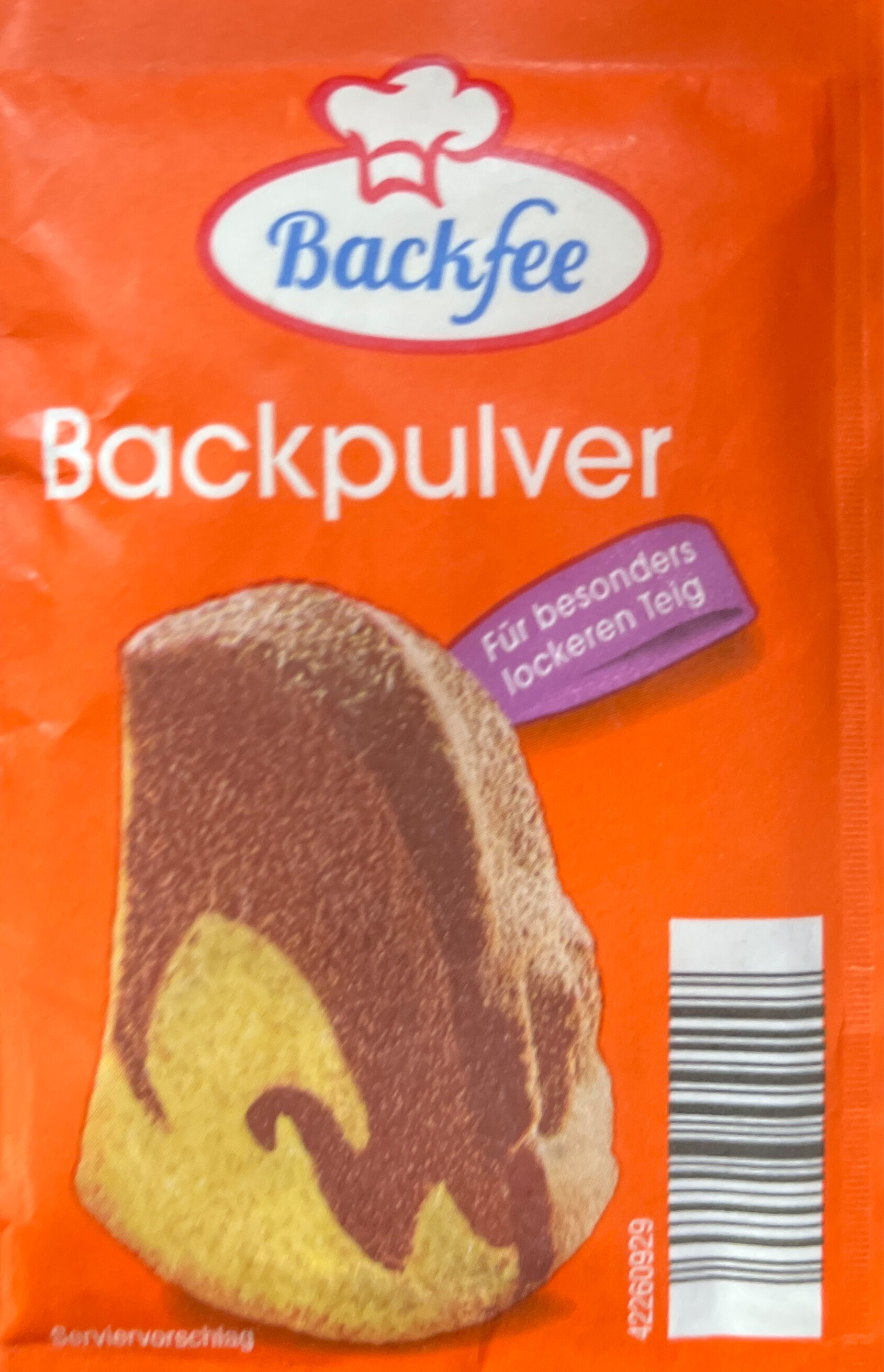
Backpulver – Backfee – 1pcs
This product page is not complete. You can help to complete it by editing it and adding more data from the photos we have, or by taking more photos using the mobile app for Android or iPhone/iPad. Thank you!
×
Barcode:
42260929
Barcode:
42260929
Quantity: 1pcs
Brands: Backfee
Categories: Cooking helpers, Food additives, Pastry helpers, Baking powder or raising agent, de:Backmittel
Origin of ingredients: Germany
Stores: Netto
Countries where sold: Germany
Matching with your preferences
Health
Nutrition
-
Nutri-Score not applicable
Not applicable for the category: Food additives
⚠ ️Nutri-Score not applicable for this product category.-
Discover the new Nutri-Score!
The computation of the Nutri-Score is evolving to provide better recommendations based on the latest scientific evidence.
Main improvements:
- Better score for some fatty fish and oils rich in good fats
- Better score for whole products rich in fiber
- Worse score for products containing a lot of salt or sugar
- Worse score for red meat (compared to poultry)
-
What is the Nutri-Score?
The Nutri-Score is a logo on the overall nutritional quality of products.
The score from A to E is calculated based on nutrients and foods to favor (proteins, fiber, fruits, vegetables and legumes ...) and nutrients to limit (calories, saturated fat, sugars, salt). The score is calculated from the data of the nutrition facts table and the composition data (fruits, vegetables and legumes).
-
-
Nutrition facts
Nutrition facts As sold
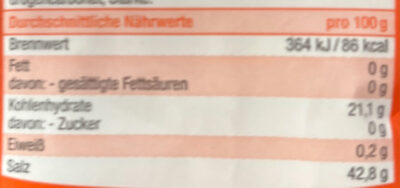
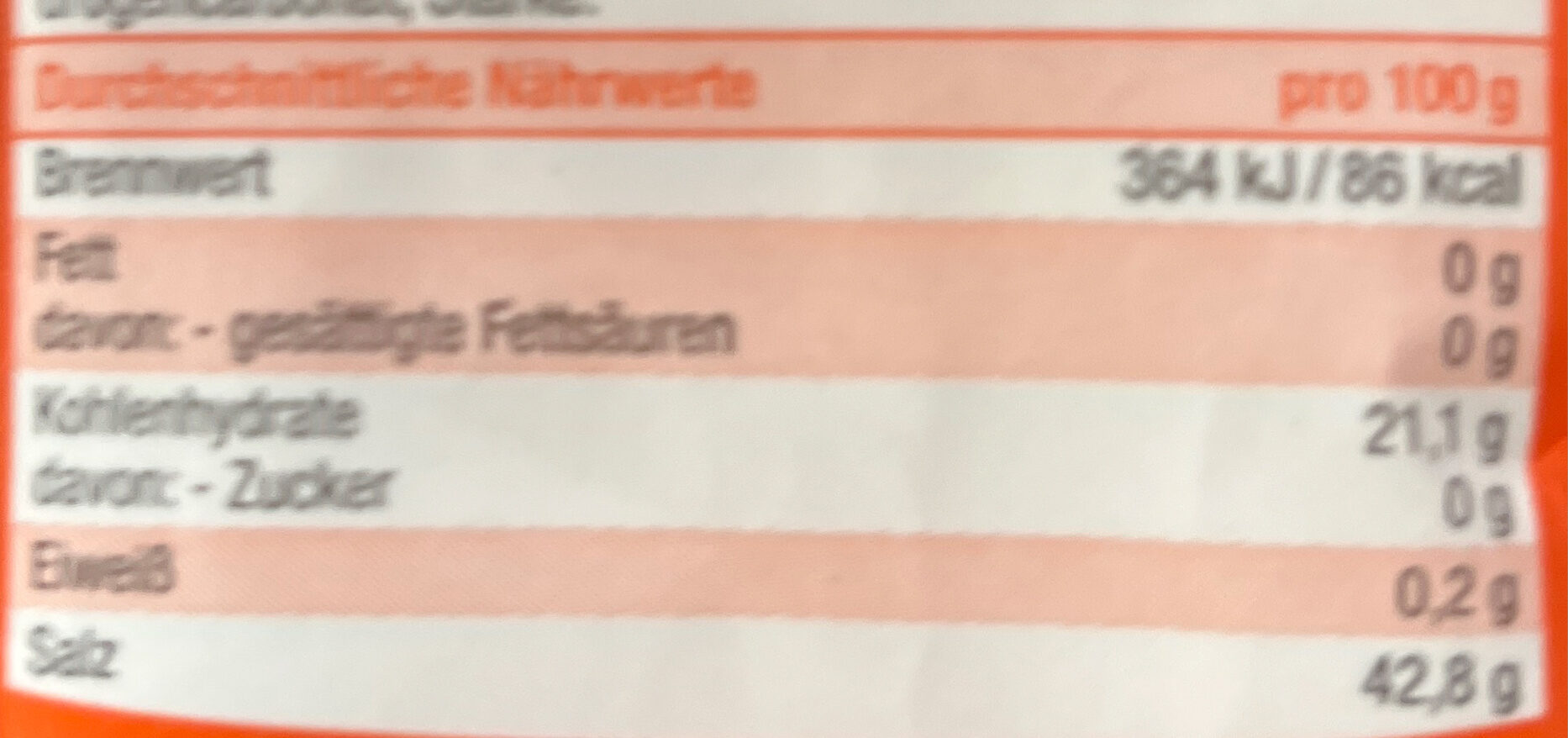
for 100 g / 100 mlCompared to: Baking powder or raising agent Energy 364 kJ
(86 kcal)547.423 kj (134 kcal) (-34%) Fat 0 g 0.24 g (-100%) Saturated fat 0 g 0.069 g (-100%) Carbohydrates 21.4 g 27.293 g (-22%) Sugars 0 g 0.321 g (-100%) Fiber 0 g 0.533 g (-100%) Proteins 0.2 g 0.822 g (-76%) Salt 42.8 g 23.247 g (+84%) Sodium 17.12 g 9.318 g (+84%) Fruits‚ vegetables‚ legumes ~ 0 % 0 % -
Nutrition facts (Detailed data)
Nutrition facts As sold
for 100 g / 100 mlAs sold for 100 g (packaging) As sold for 100 g (estimate) Energy 364 kJ
(86 kcal)364 kJ
(86 kcal)? Fat 0 g 0 g ? Saturated fat 0 g 0 g ? Carbohydrates 21.4 g 21.4 g ? Sugars 0 g 0 g ? Fiber 0 g 0 g ? Proteins 0.2 g 0.2 g ? Salt 42.8 g 42.8 g ? Sodium 17.12 g 17.12 g ? Fruits‚ vegetables‚ legumes ~ 0 % ? ~ 0 %
-
Ingredients
-
5 ingredients
acidifier, disodium diphosphate, raising agent, sodium bicarbonate, starch-
Ingredient information
-
Acid: 66.7% (estimate)
-
— E450: 66.7% (estimate)
-
Raising agent: 16.7% (estimate)
-
— E500ii: 16.7% (estimate)
-
starch: 16.7% (estimate)
-
-
Food processing
-
Ultra-processed foods
1 ultra-processing marker
-
Limit ultra-processed foods
Limiting ultra-processed foods reduces the risk of noncommunicable chronic diseases
Several studies have found that a lower consumption of ultra-processed foods is associated with a reduced risk of noncommunicable chronic diseases, such as obesity, hypertension and diabetes.
Source: Ultra-processed foods increase noncommunicable chronic disease risk
Elements that indicate the product is in the 4 - Ultra processed food and drink products group:
- Additive: E450 - Diphosphates
Food products are classified into 4 groups according to their degree of processing:
- Unprocessed or minimally processed foods
- Processed culinary ingredients
- Processed foods
- Ultra-processed foods
The determination of the group is based on the category of the product and on the ingredients it contains.
-
Additives
-
E450 - Diphosphates
Diphosphates (E450) are food additives often utilized to modify the texture of products, acting as leavening agents in baking and preventing the coagulation of canned food.
These salts can stabilize whipped cream and are also found in powdered products to maintain their flow properties. They are commonly present in baked goods, processed meats, and soft drinks.
Derived from phosphoric acid, they're part of our daily phosphate intake, which often surpasses recommended levels due to the prevalence of phosphates in processed foods and drinks.
Excessive phosphate consumption is linked to health issues, such as impaired kidney function and weakened bone health. Though diphosphates are generally regarded as safe when consumed within established acceptable daily intakes, it's imperative to monitor overall phosphate consumption to maintain optimal health.
-
E500 - Sodium carbonates
Sodium carbonates (E500) are compounds commonly used in food preparation as leavening agents, helping baked goods rise by releasing carbon dioxide when they interact with acids.
Often found in baking soda, they regulate the pH of food, preventing it from becoming too acidic or too alkaline. In the culinary world, sodium carbonates can also enhance the texture and structure of foods, such as noodles, by modifying the gluten network.
Generally recognized as safe, sodium carbonates are non-toxic when consumed in typical amounts found in food.
-
E500ii - Sodium hydrogen carbonate
Sodium hydrogen carbonate, also known as E500ii, is a food additive commonly used as a leavening agent.
When added to recipes, it releases carbon dioxide gas upon exposure to heat or acids, causing dough to rise and resulting in a light, fluffy texture in baked goods.
It is generally recognized as safe (GRAS) by regulatory authorities when used in appropriate quantities and poses no significant health risks when consumed in typical food applications.
Ingredients analysis
-
Palm oil free
No ingredients containing palm oil detected
-
Vegan
No non-vegan ingredients
-
Vegetarian
No non-vegetarian ingredients detected
-
Details of the analysis of the ingredients
de: Säuerungsmittel (Diphosphate), Backtriebmittel (Natriumhydrogencarbonat), StärkeIngredient Taxonomy ID vegan vegetarian palm_oil ciqual ciqual_proxy percent min max origin labels Säuerungsmittel en:acid 66.7 33.3 100.0 Diphosphate en:e450 yes yes 66.7 33.3 100.0 Backtriebmittel en:raising-agent 16.7 0.0 50.0 Natriumhydrogencarbonat en:e500ii yes yes 16.7 0.0 50.0 Stärke en:starch yes yes 9510 16.7 0.0 33.3
Environment
-
Green-Score B
Low environmental impact
⚠ ️Select a country in order to include the full impact of transportation.The Green-Score is an experimental score that summarizes the environmental impacts of food products.→ The Green-Score was initially developed for France and it is being extended to other European countries. The Green-Score formula is subject to change as it is regularly improved to make it more precise and better suited to each country.Life cycle analysis
-
Average impact of products of the same category: B (Score: 72/100)
Category: Baking powder or raising agent
- PEF environmental score: 0.33 (the lower the score, the lower the impact)
- including impact on climate change: 2.11 kg CO2 eq/kg of product
Stage Impact Agriculture
90.0 %Processing
0.0 %Packaging
5.7 %Transportation
2.9 %Distribution
1.4 %Consumption
0.0 %
Bonuses and maluses
-
Origins of ingredients with a medium impact
Bonus: +4
Environmental policy: +4
Transportation: 0
Origin of the product and/or its ingredients % of ingredients Impact Germany 100 %Medium
-
No ingredients that threaten species
-
Packaging with a low impact
Malus: -2
Shape Material Recycling Impact 10 Bag Paper Altpapier Low 1 Film Plastic Gelbe Tonne High
Green-Score for this product
-
Impact for this product: B (Score: 74/100)
Product: Backpulver – Backfee – 1pcs
Life cycle analysis score: 72
Sum of bonuses and maluses: +2
Final score: 74/100
-
Carbon footprint
-
Equal to driving 1.1 km in a petrol car
211 g CO₂e per 100g of product
The carbon emission figure comes from ADEME's Agribalyse database, for the category: Baking powder or raising agent (Source: ADEME Agribalyse Database)
Stage Impact Agriculture
83.9 %Processing
0.0 %Packaging
9.2 %Transportation
5.9 %Distribution
0.8 %Consumption
0.0 %
Packaging
-
Packaging with a low impact
-
Packaging parts
10 × Bag 15g (Paper: 1 g)
1 × Film 150g (Plastic: 1 g)
-
Packaging materials
Material % Packaging weight Paper or cardboard 90.9% 10 g Plastic 9.1% 1 g Total 100% 11 g
-
Transportation
-
Origins of ingredients
Origins of ingredients with a medium impact
Origin of the product and/or its ingredients % of ingredients Impact Germany 100 %Medium

Report a problem
-
Incomplete or incorrect information?
Category, labels, ingredients, allergens, nutritional information, photos etc.
If the information does not match the information on the packaging, you can complete or correct it. Thank you! Open Food Facts is a collaborative database, and every contribution is useful for all.If you want to report vandalism, inappropriate content or erroneous data you can't fix yourself, report it to our moderators team.
Data sources
Product added on by sil
Last edit of product page on by new-nutrition-bot.
Product page also edited by anniec, date-limite-app, ecoscore-impact-estimator, grumpf, inf, kiliweb, packbot, prepperapp, rochus, shaky76, yuka.sY2b0xO6T85zoF3NwEKvllBqc8HlvimbMQzggXCP-Ou2LKPtXMBLs5D8Pag, yuka.sY2b0xO6T85zoF3NwEKvlmpqVcjk_mz9JgLTgxfQzfu_Eay4S-5o-parMKg.