Help us inform millions of consumers around the world about what they eat
Please give to our 2026 Fundraiser
Your donations fund the day-to-day operations of our non-profit association:
-
keeping our database open & available to all,
- technical infrastructure (website/mobile app) & a small permanent team
-
remain independent of the food industry,
-
engage a community of committed citizens,
-
support the advancement of public health research.
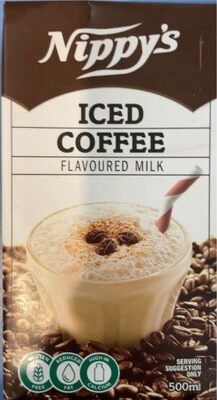
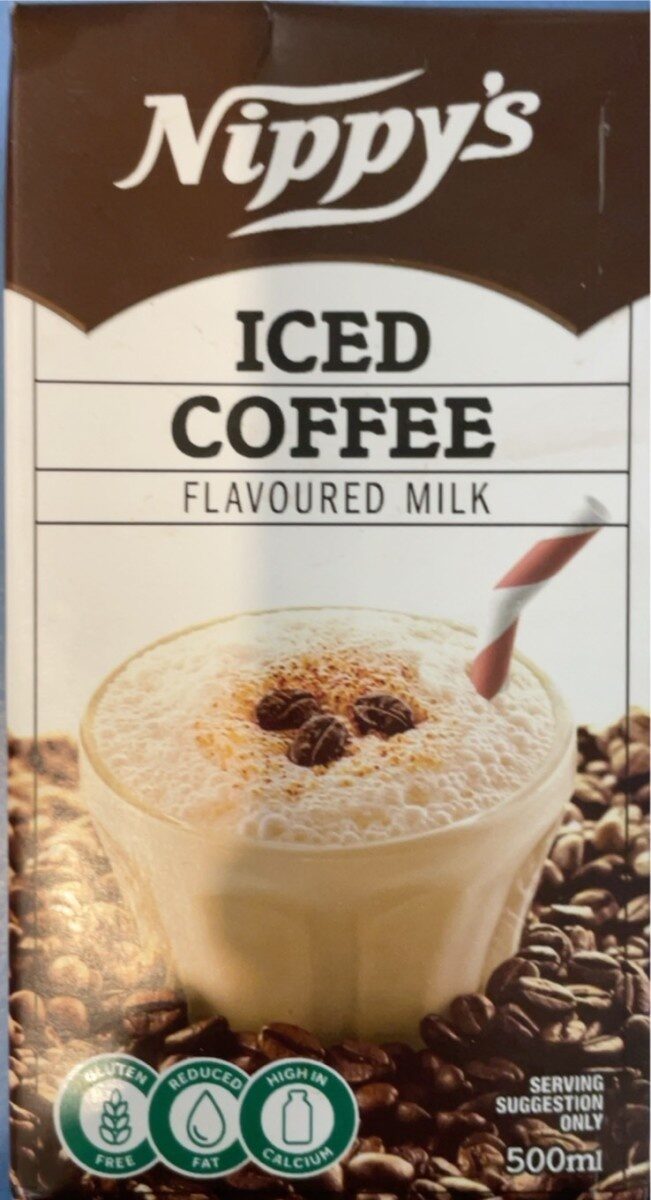
Iced coffee milk – Nippys – 500 ml
Barcode:
9311336030069(EAN / EAN-13)
Barcode:
9311336030069(EAN / EAN-13)
Common name: Iced coffee
Quantity: 500 ml
Packaging: Box
Brands: Nippys
Categories: Beverages and beverages preparations, Beverages, Dairies, Milks (liquid and powder), Dairy drinks, Milks, Flavoured milks, Unsweetened beverages, Coffee drinks, Iced coffees
Labels, certifications, awards: Australian made
Origin of ingredients: Australia
Manufacturing or processing places: South Australia, Australia, Loxton
Traceability code: FSC-C020428
Link to the product page on the official site of the producer: http://www.nippys.com.au
Countries where sold: Australia, New Zealand
Matching with your preferences
Health
Nutrition
-
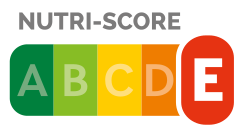
Nutri-Score C
Average nutritional quality
⚠ ️Warning: the amount of fiber is not specified, their possible positive contribution to the grade could not be taken into account.⚠ ️Warning: the amount of fruits, vegetables and nuts is not specified on the label, it was estimated from the list of ingredients: 0-
Discover the new Nutri-Score!
The computation of the Nutri-Score is evolving to provide better recommendations based on the latest scientific evidence.
Main improvements:
- Better score for some fatty fish and oils rich in good fats
- Better score for whole products rich in fiber
- Worse score for products containing a lot of salt or sugar
- Worse score for red meat (compared to poultry)
-
What is the Nutri-Score?
The Nutri-Score is a logo on the overall nutritional quality of products.
The score from A to E is calculated based on nutrients and foods to favor (proteins, fiber, fruits, vegetables and legumes ...) and nutrients to limit (calories, saturated fat, sugars, salt). The score is calculated from the data of the nutrition facts table and the composition data (fruits, vegetables and legumes).
Negative points: 12/54
-
Energy
5/10 points (261kJ)
Energy intakes above energy requirements are associated with increased risks of weight gain, overweight, obesity, and consequently risk of diet-related chronic diseases.
-
Sugar
6/10 points (8g)
A high consumption of sugar can cause weight gain and tooth decay. It also augments the risk of type 2 diabetes and cardio-vascular diseases.
-
Saturated fat
1/10 points (1.3g)
A high consumption of fat, especially saturated fats, can raise cholesterol, which increases the risk of heart diseases.
-
Salt
0/20 points (0.1g)
A high consumption of salt (or sodium) can cause raised blood pressure, which can increase the risk of heart disease and stroke.
-
Non-nutritive sweeteners
0/4 points (0 sweetener)
Non-nutritive sweeteners may not confer any long-term benefit in reducing body fat in adults or children. There may be potential undesirable effects from long-term use of non-nutritive sweeteners, such as an increased risk of type 2 diabetes and cardiovascular diseases in adults.
Positive points: 7/18
-
Proteins
7/7 points (3.2g)
Foods that are rich in proteins are usually rich in calcium or iron which are essential minerals with numerous health benefits.
-
Fiber
0/5 points (unknown)
Consuming foods rich in fiber (especially whole grain foods) reduces the risks of aerodigestive cancers, cardiovascular diseases, obesity and diabetes.
-
Fruits, vegetables and legumes
0/6 points (0%)
Consuming foods rich in fruits, vegetables and legumes reduces the risks of aerodigestive cancers, cardiovascular diseases, obesity and diabetes.
-
Details of the calculation of the Nutri-Score
⚠ ️Warning: the amount of fiber is not specified, their possible positive contribution to the grade could not be taken into account.⚠ ️Warning: the amount of fruits, vegetables and nuts is not specified on the label, it was estimated from the list of ingredients: 0This product is considered a beverage for the calculation of the Nutri-Score.
Points for proteins are counted because the product is considered to be a beverage.
Nutritional score: 5 (12 - 7)
Nutri-Score: C
-
-
Nutrient levels
-
Fat in moderate quantity (1.9%)
What you need to know- A high consumption of fat, especially saturated fats, can raise cholesterol, which increases the risk of heart diseases.
Recommendation: Limit the consumption of fat and saturated fat- Choose products with lower fat and saturated fat content.
-
Saturated fat in moderate quantity (1.3%)
What you need to know- A high consumption of fat, especially saturated fats, can raise cholesterol, which increases the risk of heart diseases.
Recommendation: Limit the consumption of fat and saturated fat- Choose products with lower fat and saturated fat content.
-
Sugars in high quantity (8%)
What you need to know- A high consumption of sugar can cause weight gain and tooth decay. It also augments the risk of type 2 diabetes and cardio-vascular diseases.
Recommendation: Limit the consumption of sugar and sugary drinks- Sugary drinks (such as sodas, fruit beverages, and fruit juices and nectars) should be limited as much as possible (no more than 1 glass a day).
- Choose products with lower sugar content and reduce the consumption of products with added sugars.
-
Salt in low quantity (0.095%)
What you need to know- A high consumption of salt (or sodium) can cause raised blood pressure, which can increase the risk of heart disease and stroke.
- Many people who have high blood pressure do not know it, as there are often no symptoms.
- Most people consume too much salt (on average 9 to 12 grams per day), around twice the recommended maximum level of intake.
Recommendation: Limit the consumption of salt and salted food- Reduce the quantity of salt used when cooking, and don't salt again at the table.
- Limit the consumption of salty snacks and choose products with lower salt content.
-
-
Nutrition facts
Nutrition facts As sold
for 100 g / 100 mlCompared to: Iced coffees Energy 261 kJ
(63 kcal)259.46 kj (63 kcal) (+1%) Fat 1.9 g 1.464 g (+30%) Saturated fat 1.3 g 0.85 g (+53%) Carbohydrates 8.4 g 8.586 g (-2%) Sugars 8 g 7.47 g (+7%) Fiber ? 0.558 g Proteins 3.2 g 2.52 g (+27%) Salt 0.095 g 0.146 g (-35%) Sodium 0.038 g 0.058 g (-35%) Calcium 0.097 g 93.953 mg (+3%) Fruits‚ vegetables‚ legumes ? 0 % -
Nutrition facts (Detailed data)
Nutrition facts As sold
for 100 g / 100 mlAs sold for 100 ml (packaging) Energy 261 kJ
(63 kcal)261 kJ
(63 kcal)Fat 1.9 g 1.9 g Saturated fat 1.3 g 1.3 g Carbohydrates 8.4 g 8.4 g Sugars 8 g 8 g Fiber ? ? Proteins 3.2 g 3.2 g Salt 0.095 g 0.095 g Sodium 0.038 g 0.038 g Calcium 0.097 g 0.097 g Fruits‚ vegetables‚ legumes ? ?
-
Ingredients
-
8 ingredients
REDUCED FAT MILK (95%), SUGAR, COFFEE POWDER (0.4% MINIMUM), FLAVOURS, EMULSIFIER (471), VEGETABLE GUM (407). CONTAINS MILK.Allergens: Milk-
Ingredient information
-
Semi-skimmed milk: 95.0%
-
Sugar: 4.0% (estimate)
-
Coffee powder: 0.4%
-
Flavouring: < 2% (estimate)
-
Emulsifier: < 2% (estimate)
-
— 471: < 2% (estimate)
-
Vegetable-gum: < 2% (estimate)
-
— 407: < 2% (estimate)
-
-
-
Contains added sugars (~ 4%)
Added sugars: Sugar
Estimated quantity of added sugars in ingredients: 4%Search for products in the same category without added sugars: Iced coffeesWhat you need to know- A high consumption of sugar can cause weight gain and tooth decay. It also augments the risk of type 2 diabetes and cardio-vascular diseases.
Recommendation: Limit the consumption of sugar and sugary drinks- Sugary drinks (such as sodas, fruit beverages, and fruit juices and nectars) should be limited as much as possible (no more than 1 glass a day).
- Choose products with lower sugar content and reduce the consumption of products with added sugars.
Food processing
-
Ultra-processed foods
4 ultra-processing markers
-
Limit ultra-processed foods
Limiting ultra-processed foods reduces the risk of noncommunicable chronic diseases
Several studies have found that a lower consumption of ultra-processed foods is associated with a reduced risk of noncommunicable chronic diseases, such as obesity, hypertension and diabetes.
Source: Ultra-processed foods increase noncommunicable chronic disease risk
Elements that indicate the product is in the 4 - Ultra processed food and drink products group:
- Additive: E407 - Carrageenan
- Additive: E471 - Mono- and diglycerides of fatty acids
- Ingredient: Emulsifier
- Ingredient: Flavouring
Food products are classified into 4 groups according to their degree of processing:
- Unprocessed or minimally processed foods
- Processed culinary ingredients
- Processed foods
- Ultra-processed foods
The determination of the group is based on the category of the product and on the ingredients it contains.
-
Additives
-
E407 - Carrageenan
Carrageenan (E407), derived from red seaweed, is widely employed in the food industry as a gelling, thickening, and stabilizing agent, notably in dairy and meat products.
It can exist in various forms, each imparting distinct textural properties to food.
However, its degraded form, often referred to as poligeenan, has raised health concerns due to its potential inflammatory effects and its classification as a possible human carcinogen (Group 2B) by the International Agency for Research on Cancer (IARC).
Nevertheless, food-grade carrageenan has been deemed safe by various regulatory bodies when consumed in amounts typically found in food.
-
E471 - Mono- and diglycerides of fatty acids
Mono- and diglycerides of fatty acids (E471), are food additives commonly used as emulsifiers in various processed foods.
These compounds consist of glycerol molecules linked to one or two fatty acid chains, which help stabilize and blend water and oil-based ingredients. E471 enhances the texture and shelf life of products like margarine, baked goods, and ice cream, ensuring a smooth and consistent texture.
It is generally considered safe for consumption within established regulatory limits.
Ingredients analysis
-
Palm oil content unknown
Unrecognized ingredients: 471, Vegetable-gum, 407Some ingredients could not be recognized.
We need your help!
You can help us recognize more ingredients and better analyze the list of ingredients for this product and others:
- Edit this product page to correct spelling mistakes in the ingredients list, and/or to remove ingredients in other languages and sentences that are not related to the ingredients.
- Add new entries, synonyms or translations to our multilingual lists of ingredients, ingredient processing methods, and labels.
If you would like to help, join the #ingredients channel on our Slack discussion space and/or learn about ingredients analysis on our wiki. Thank you!
-
Non-vegan
Non-vegan ingredients: Semi-skimmed milkSome ingredients could not be recognized.
We need your help!
You can help us recognize more ingredients and better analyze the list of ingredients for this product and others:
- Edit this product page to correct spelling mistakes in the ingredients list, and/or to remove ingredients in other languages and sentences that are not related to the ingredients.
- Add new entries, synonyms or translations to our multilingual lists of ingredients, ingredient processing methods, and labels.
If you would like to help, join the #ingredients channel on our Slack discussion space and/or learn about ingredients analysis on our wiki. Thank you!
-
Vegetarian status unknown
Unrecognized ingredients: 471, Vegetable-gum, 407Some ingredients could not be recognized.
We need your help!
You can help us recognize more ingredients and better analyze the list of ingredients for this product and others:
- Edit this product page to correct spelling mistakes in the ingredients list, and/or to remove ingredients in other languages and sentences that are not related to the ingredients.
- Add new entries, synonyms or translations to our multilingual lists of ingredients, ingredient processing methods, and labels.
If you would like to help, join the #ingredients channel on our Slack discussion space and/or learn about ingredients analysis on our wiki. Thank you!
-
Details of the analysis of the ingredients
We need your help!
Some ingredients could not be recognized.
We need your help!
You can help us recognize more ingredients and better analyze the list of ingredients for this product and others:
- Edit this product page to correct spelling mistakes in the ingredients list, and/or to remove ingredients in other languages and sentences that are not related to the ingredients.
- Add new entries, synonyms or translations to our multilingual lists of ingredients, ingredient processing methods, and labels.
If you would like to help, join the #ingredients channel on our Slack discussion space and/or learn about ingredients analysis on our wiki. Thank you!
en: REDUCED FAT MILK 95%, SUGAR, COFFEE POWDER 0.4%, FLAVOURS, EMULSIFIER (471), VEGETABLE GUM (407)- REDUCED FAT MILK -> en:semi-skimmed-milk – vegan: no – vegetarian: yes – ciqual_proxy_food_code: 19041 – percent_min: 95 – percent: 95 – percent_max: 95
- SUGAR -> en:sugar – vegan: yes – vegetarian: yes – ciqual_proxy_food_code: 31016 – percent_min: 3.4 – percent_estimate: 4 – percent_max: 4.6
- COFFEE POWDER -> en:coffee-powder – vegan: yes – vegetarian: yes – ciqual_proxy_food_code: 18003 – percent_min: 0.4 – percent: 0.4 – percent_max: 0.4
- FLAVOURS -> en:flavouring – vegan: maybe – vegetarian: maybe – percent_min: 0 – percent_estimate: 0.2 – percent_max: 0.4
- EMULSIFIER -> en:emulsifier – percent_min: 0 – percent_estimate: 0.199999999999996 – percent_max: 0.4
- 471 -> en:471 – percent_min: 0 – percent_estimate: 0.199999999999996 – percent_max: 0.4
- VEGETABLE GUM -> en:vegetable-gum – percent_min: 0 – percent_estimate: 0.199999999999989 – percent_max: 0.4
- 407 -> en:407 – percent_min: 0 – percent_estimate: 0.199999999999989 – percent_max: 0.4
Environment
-
Green-Score C
Moderate environmental impact
⚠ ️Select a country in order to include the full impact of transportation.The Green-Score is an experimental score that summarizes the environmental impacts of food products.→ The Green-Score was initially developed for France and it is being extended to other European countries. The Green-Score formula is subject to change as it is regularly improved to make it more precise and better suited to each country.Life cycle analysis
-
Average impact of products of the same category: C (Score: 57/100)
Category: Milk, semi-skimmed, UHT
- PEF environmental score: 0.12 (the lower the score, the lower the impact)
- including impact on climate change: 1.31 kg CO2 eq/kg of product
Stage Impact Agriculture
70.5 %Processing
1.2 %Packaging
11.7 %Transportation
12.8 %Distribution
3.8 %Consumption
0.0 %
Bonuses and maluses
-
Origins of ingredients with a medium impact
Bonus: +3
Environmental policy: +3
Transportation: 0
Origin of the product and/or its ingredients % of ingredients Impact Australia 100 %Medium
-
No ingredients that threaten species
-
Packaging with a medium impact
Malus: -11
Shape Material Recycling Impact Box Unknown High 1 Drinking straw Cardboard Low ⚠ ️ The information about the packaging of this product is not sufficiently precise (exact shapes and materials of all components of the packaging).⚠ ️ For a more precise calculation of the Green-Score, you can edit the product page and add them.
If you are the manufacturer of this product, you can send us the information with our free platform for producers.
Green-Score for this product
-
Impact for this product: C (Score: 49/100)
Product: Iced coffee milk – Nippys – 500 ml
Life cycle analysis score: 57
Sum of bonuses and maluses: -8
Final score: 49/100
-
Carbon footprint
-
Equal to driving 0.7 km in a petrol car
131 g CO₂e per 100g of product
The carbon emission figure comes from ADEME's Agribalyse database, for the category: Milk, semi-skimmed, UHT (Source: ADEME Agribalyse Database)
Stage Impact Agriculture
71.2 %Processing
0.9 %Packaging
11.3 %Transportation
15.4 %Distribution
1.2 %Consumption
0.0 %
Packaging
-
Packaging with a medium impact
-
Packaging parts
Box
1 × Drinking straw (Cardboard)
-
Packaging materials
Material % Packaging weight Packaging weight per 100 g of product Paper or cardboard
-
Transportation
-
Origins of ingredients
Origins of ingredients with a medium impact
Origin of the product and/or its ingredients % of ingredients Impact Australia 100 %Medium
Report a problem
-
Incomplete or incorrect information?
Category, labels, ingredients, allergens, nutritional information, photos etc.
If the information does not match the information on the packaging, you can complete or correct it. Thank you! Open Food Facts is a collaborative database, and every contribution is useful for all.If you want to report vandalism, inappropriate content or erroneous data you can't fix yourself, report it to our moderators team.
Data sources
Product added on by clockwerx
Last edit of product page on by roboto-app.
Product page also edited by kiliweb, lcmortensen, packbot, yuka.sY2b0xO6T85zoF3NwEKvlkZuCN2A8hL-Mzz5mkTTz8quDpn2Zux-xov2aas.