Help us inform millions of consumers around the world about what they eat

group photo donation 2024
open food facts logo

Please give to our 2025 Fundraiser

Your donations fund the day-to-day operations of our non-profit association:

  • keeping our database open & available to all,
    • technical infrastructure (website/mobile app) & a small permanent team
  • remain independent of the food industry,

  • engage a community of committed citizens,

  • support the advancement of public health research.

Each donation counts! We appreciate your support in bringing further food transparency in the world.

arrow_upward

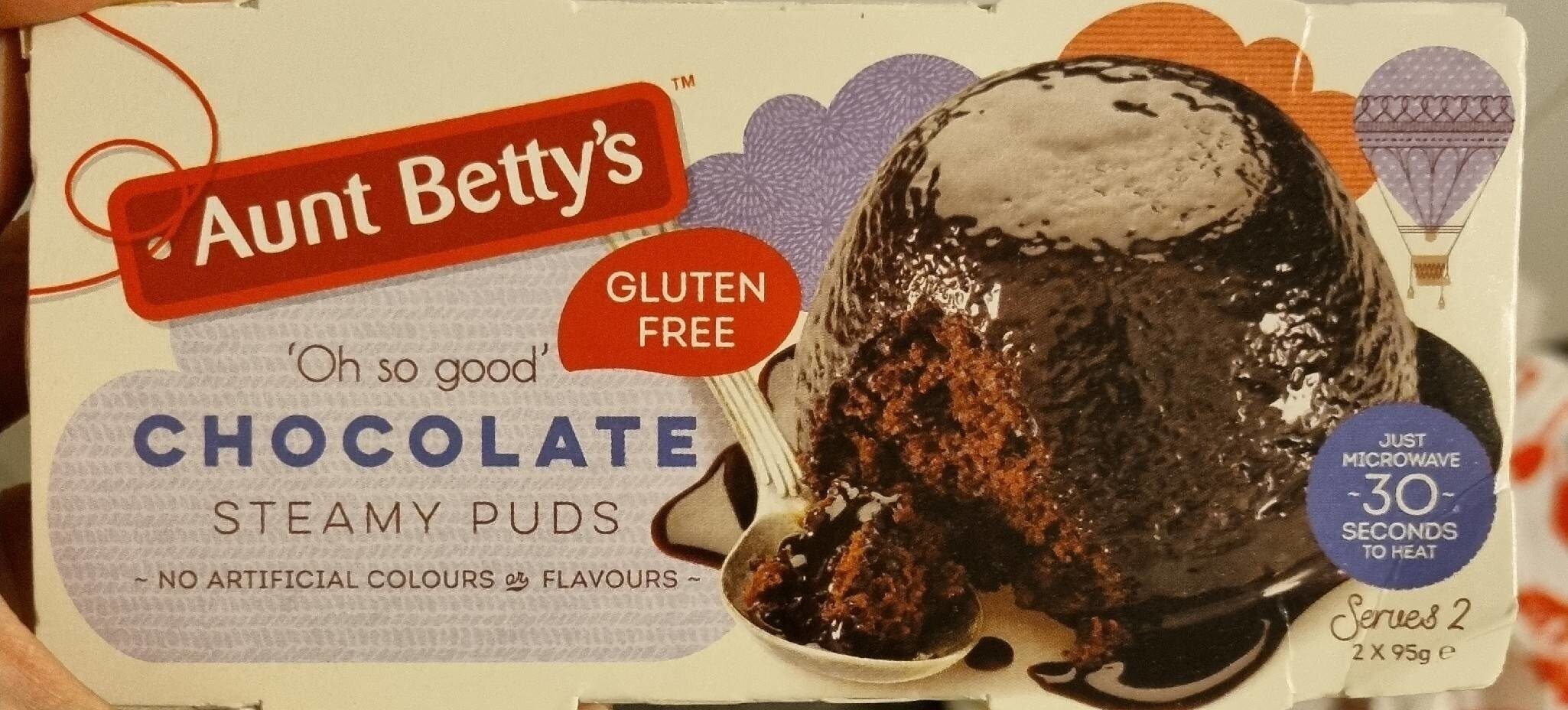
Gluten free chocolate steamy puds – Aunt Betty's – 2 x 95 g

Gluten free chocolate steamy puds – Aunt Betty's – 2 x 95 g

This product page is not complete. You can help to complete it by editing it and adding more data from the photos we have, or by taking more photos using the app for Android or iPhone/iPad. Thank you! ×

Barcode:
9417986943367(EAN / EAN-13)

Quantity: 2 x 95 g

Brands: Aunt Betty's

Categories: Desserts, Puddings

Labels, certifications, awards: No gluten

Stores: Woolworths, Coles

Countries where sold: Australia, New Zealand

Matching with your preferences

Health

Nutrition

  • icon

    Nutri-Score E

    Lower nutritional quality
    ⚠ ️Warning: the amount of fruits, vegetables and nuts is not specified on the label, it was estimated from the list of ingredients: 0
    • icon

      Discover the new Nutri-Score!


      The computation of the Nutri-Score is evolving to provide better recommendations based on the latest scientific evidence.

      Main improvements:

      • Better score for some fatty fish and oils rich in good fats
      • Better score for whole products rich in fiber
      • Worse score for products containing a lot of salt or sugar
      • Worse score for red meat (compared to poultry)
    • icon

      What is the Nutri-Score?


      The Nutri-Score is a logo on the overall nutritional quality of products.

      The score from A to E is calculated based on nutrients and foods to favor (proteins, fiber, fruits, vegetables and legumes ...) and nutrients to limit (calories, saturated fat, sugars, salt). The score is calculated from the data of the nutrition facts table and the composition data (fruits, vegetables and legumes).

    icon

    Negative points: 20/55

    • icon

      Energy

      3/10 points (1274kJ)

      Energy intakes above energy requirements are associated with increased risks of weight gain, overweight, obesity, and consequently risk of diet-related chronic diseases.

    • icon

      Sugar

      11/15 points (37.79g)

      A high consumption of sugar can cause weight gain and tooth decay. It also augments the risk of type 2 diabetes and cardio-vascular diseases.

    • icon

      Salt

      4/20 points (0.82g)

      A high consumption of salt (or sodium) can cause raised blood pressure, which can increase the risk of heart disease and stroke.

    icon

    Positive points: 0/10

    • icon

      Fiber

      0/5 points (0g)

      Consuming foods rich in fiber (especially whole grain foods) reduces the risks of aerodigestive cancers, cardiovascular diseases, obesity and diabetes.

    • icon

      Details of the calculation of the Nutri-Score


      ⚠ ️Warning: the amount of fruits, vegetables and nuts is not specified on the label, it was estimated from the list of ingredients: 0

      This product is not considered a beverage for the calculation of the Nutri-Score.

      Points for proteins are not counted because the negative points greater than or equal to 11.

      Nutritional score: 20 (20 - 0)

      Nutri-Score: E

  • icon

    Nutrition facts


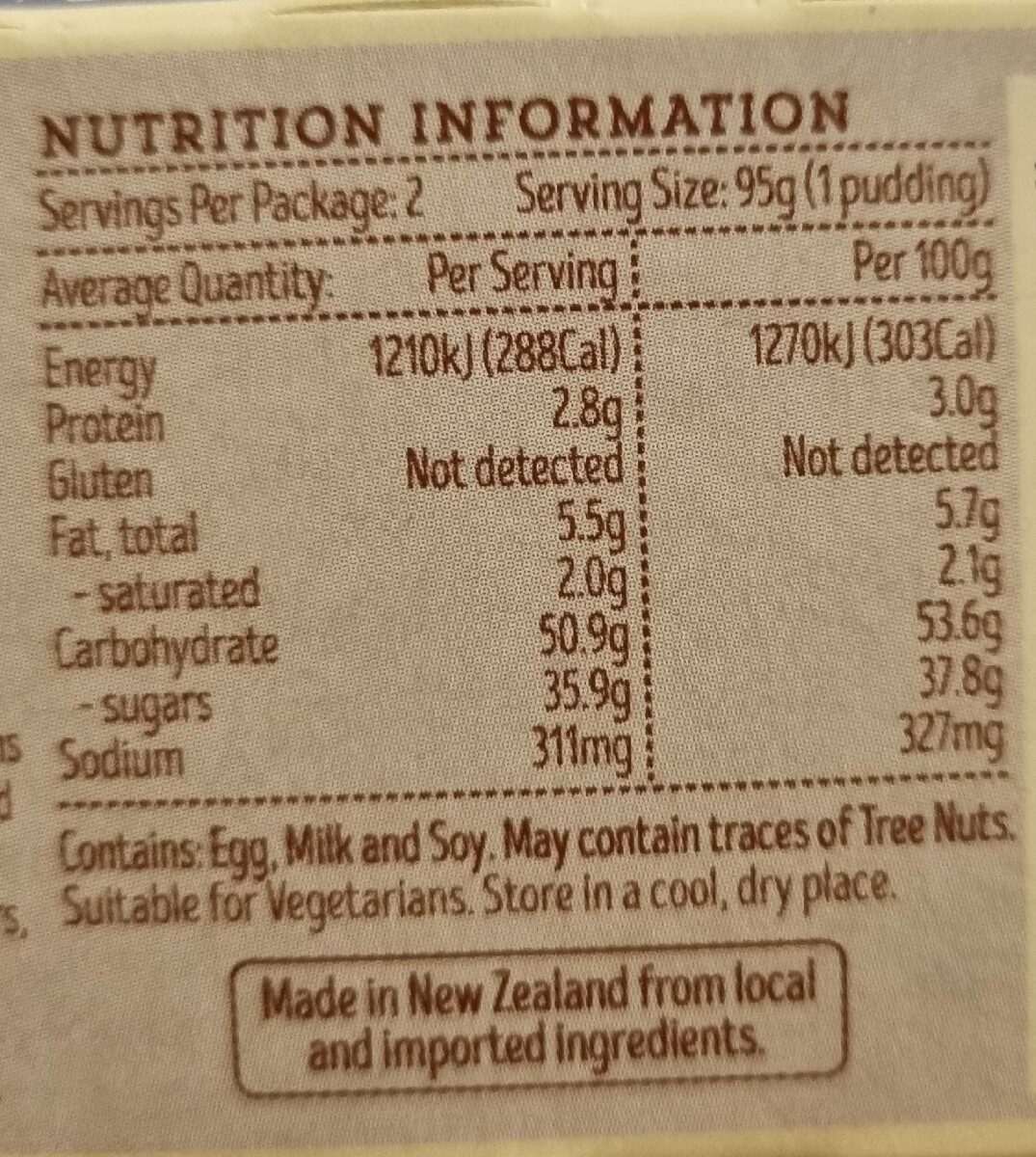
    Nutrition facts As sold
    for 100 g / 100 ml
    Compared to: Puddings
    Energy 1,274 kj
    (304 kcal)
    +120%
    Fat 5.789 g +65%
    Saturated fat 2.105 g -2%
    Carbohydrates 53.579 g +158%
    Sugars 37.789 g +210%
    Fiber 0 g -100%
    Proteins 2.947 g -26%
    Salt 0.818 g +376%
    Fruits‚ vegetables‚ nuts and rapeseed‚ walnut and olive oils (estimate from ingredients list analysis) 0 %

Ingredients

  • icon

    28 ingredients


    invert sugar syrup, water, gluten free flour blend tapioca rice sugar, humectants 422, 420 glucose syrup, preservative 223, sulphites, rice bran spread (rice bran oil), salt, emsulifer 322, soy thickeners (1442,1414), alcohol, egg powder, acidity regulator 270, coconut powder, raising agents 500 450, sweetened condensed milk , natural flavours milk , emsulifer 475, stabilisers 415,401, 440, preservatives 200, 202, salt, acidity regulator 270, coca solids, contains milk, egg, soy, sulphites may contain almonds,pecans.
    Allergens: Eggs, Milk, Soybeans, Sulphur dioxide and sulphites
    Traces: Nuts
    • Ingredient information


      • Invert sugar syrup: 51.9% (estimate)


      • Water: 24.0% (estimate)


      • Flour-blend-tapioca-rice-sugar: 12.0% (estimate)


      • Humectants-422: 6.0% (estimate)


      • 420-glucose-syrup: 3.0% (estimate)


      • Preservative-223: < 2% (estimate)


      • Sulfite: < 2% (estimate)


      • Rice-bran-spread: < 2% (estimate)


      • — Rice bran oil: < 2% (estimate)


      • Salt: < 2% (estimate)


      • Emsulifer-322: < 2% (estimate)


      • Soy-thickeners: < 2% (estimate)


      • — 1442-1414: < 2% (estimate)


      • Alcohol: < 2% (estimate)


      • Egg powder: < 2% (estimate)


      • Acidity-regulator-270: < 2% (estimate)


      • Coconut: < 2% (estimate)


      • Raising-agents-500-450: < 2% (estimate)


      • Sweetened condensed milk: < 2% (estimate)


      • Natural-flavours-milk: < 2% (estimate)


      • Emsulifer-475: < 2% (estimate)


      • Stabilisers-415-401: < 2% (estimate)


      • 440: < 2% (estimate)


      • Preservatives-200: < 2% (estimate)


      • 202: < 2% (estimate)


      • Salt: < 2% (estimate)


      • Acidity-regulator-270: < 2% (estimate)


      • Coca-solids: < 2% (estimate)


  • icon

    Contains added sugars (~ 51%)

    Added sugars: Invert sugar syrup
    Estimated quantity of added sugars in ingredients: 51%
    Search for products in the same category without added sugars: Puddings
    What you need to know
    • A high consumption of sugar can cause weight gain and tooth decay. It also augments the risk of type 2 diabetes and cardio-vascular diseases.

    Recommendation: Limit the consumption of sugar and sugary drinks
    • Sugary drinks (such as sodas, fruit beverages, and fruit juices and nectars) should be limited as much as possible (no more than 1 glass a day).
    • Choose products with lower sugar content and reduce the consumption of products with added sugars.

Food processing

Additives

  • E1414 - Acetylated distarch phosphate


  • E1442 - Hydroxypropyl distarch phosphate


    Hydroxypropyl distarch phosphate: Hydroxypropyl distarch phosphate -HDP- is a modified resistant starch. It is currently used as a food additive -INS number 1442-. It is approved for use in the European Union -listed as E1442-, the United States, Australia, Taiwan, and New Zealand.
    Source: Wikipedia
  • E200 - Sorbic acid


    Sorbic acid: Sorbic acid, or 2‚4-hexadienoic acid, is a natural organic compound used as a food preservative. It has the chemical formula CH3-CH-4CO2H. It is a colourless solid that is slightly soluble in water and sublimes readily. It was first isolated from the unripe berries of the Sorbus aucuparia -rowan tree-, hence its name.
    Source: Wikipedia
  • E202 - Potassium sorbate


    Potassium sorbate (E202) is a synthetic food preservative commonly used to extend the shelf life of various food products.

    It works by inhibiting the growth of molds, yeast, and some bacteria, preventing spoilage. When added to foods, it helps maintain their freshness and quality.

    Some studies have shown that when combined with nitrites, potassium sorbate have genotoxic activity in vitro. However, potassium sorbate is generally recognized as safe (GRAS) by regulatory authorities.

  • E270 - Lactic acid


    Lactic acid: Lactic acid is an organic compound with the formula CH3CH-OH-COOH. In its solid state, it is white and water-soluble. In its liquid state, it is colorless. It is produced both naturally and synthetically. With a hydroxyl group adjacent to the carboxyl group, lactic acid is classified as an alpha-hydroxy acid -AHA-. In the form of its conjugate base called lactate, it plays a role in several biochemical processes. In solution, it can ionize a proton from the carboxyl group, producing the lactate ion CH3CH-OH-CO−2. Compared to acetic acid, its pKa is 1 unit less, meaning lactic acid deprotonates ten times more easily than acetic acid does. This higher acidity is the consequence of the intramolecular hydrogen bonding between the α-hydroxyl and the carboxylate group. Lactic acid is chiral, consisting of two optical isomers. One is known as L--+--lactic acid or -S--lactic acid and the other, its mirror image, is D--−--lactic acid or -R--lactic acid. A mixture of the two in equal amounts is called DL-lactic acid, or racemic lactic acid. Lactic acid is hygroscopic. DL-lactic acid is miscible with water and with ethanol above its melting point which is around 17 or 18 °C. D-lactic acid and L-lactic acid have a higher melting point. In animals, L-lactate is constantly produced from pyruvate via the enzyme lactate dehydrogenase -LDH- in a process of fermentation during normal metabolism and exercise. It does not increase in concentration until the rate of lactate production exceeds the rate of lactate removal, which is governed by a number of factors, including monocarboxylate transporters, concentration and isoform of LDH, and oxidative capacity of tissues. The concentration of blood lactate is usually 1–2 mM at rest, but can rise to over 20 mM during intense exertion and as high as 25 mM afterward. In addition to other biological roles, L-lactic acid is the primary endogenous agonist of hydroxycarboxylic acid receptor 1 -HCA1-, which is a Gi/o-coupled G protein-coupled receptor -GPCR-.In industry, lactic acid fermentation is performed by lactic acid bacteria, which convert simple carbohydrates such as glucose, sucrose, or galactose to lactic acid. These bacteria can also grow in the mouth; the acid they produce is responsible for the tooth decay known as caries. In medicine, lactate is one of the main components of lactated Ringer's solution and Hartmann's solution. These intravenous fluids consist of sodium and potassium cations along with lactate and chloride anions in solution with distilled water, generally in concentrations isotonic with human blood. It is most commonly used for fluid resuscitation after blood loss due to trauma, surgery, or burns.
    Source: Wikipedia
  • E401 - Sodium alginate


  • E415 - Xanthan gum


    Xanthan gum (E415) is a natural polysaccharide derived from fermented sugars, often used in the food industry as a thickening and stabilizing agent.

    This versatile food additive enhances texture and prevents ingredient separation in a wide range of products, including salad dressings, sauces, and gluten-free baked goods.

    It is considered safe for consumption even at high intake amounts.

  • E440 - Pectins


    Pectins (E440) are natural carbohydrates, predominantly found in fruits, that act as gelling agents in the food industry, creating the desirable jelly-like texture in jams, jellies, and marmalades.

    Pectins stabilize and thicken various food products, such as desserts, confectioneries, and beverages, ensuring a uniform consistency and quality.

    Recognized as safe by various health authorities, pectins have been widely used without notable adverse effects when consumed in typical dietary amounts.

  • E450 - Diphosphates


    Diphosphates (E450) are food additives often utilized to modify the texture of products, acting as leavening agents in baking and preventing the coagulation of canned food.

    These salts can stabilize whipped cream and are also found in powdered products to maintain their flow properties. They are commonly present in baked goods, processed meats, and soft drinks.

    Derived from phosphoric acid, they're part of our daily phosphate intake, which often surpasses recommended levels due to the prevalence of phosphates in processed foods and drinks.

    Excessive phosphate consumption is linked to health issues, such as impaired kidney function and weakened bone health. Though diphosphates are generally regarded as safe when consumed within established acceptable daily intakes, it's imperative to monitor overall phosphate consumption to maintain optimal health.

  • E475 - Polyglycerol esters of fatty acids


Ingredients analysis

  • icon

    Palm oil content unknown


    Unrecognized ingredients: Flour-blend-tapioca-rice-sugar, Humectants-422, 420-glucose-syrup, Preservative-223, Rice-bran-spread, Emsulifer-322, Soy-thickeners, 1442-1414, Acidity-regulator-270, Raising-agents-500-450, Natural-flavours-milk, Emsulifer-475, Stabilisers-415-401, 440, Preservatives-200, 202, Acidity-regulator-270, Coca-solids

    Some ingredients could not be recognized.

    We need your help!

    You can help us recognize more ingredients and better analyze the list of ingredients for this product and others:

    • Edit this product page to correct spelling mistakes in the ingredients list, and/or to remove ingredients in other languages and sentences that are not related to the ingredients.
    • Add new entries, synonyms or translations to our multilingual lists of ingredients, ingredient processing methods, and labels.

    If you would like to help, join the #ingredients channel on our Slack discussion space and/or learn about ingredients analysis on our wiki. Thank you!

  • icon

    Non-vegan


    Non-vegan ingredients: Egg powder, Sweetened condensed milk

    Some ingredients could not be recognized.

    We need your help!

    You can help us recognize more ingredients and better analyze the list of ingredients for this product and others:

    • Edit this product page to correct spelling mistakes in the ingredients list, and/or to remove ingredients in other languages and sentences that are not related to the ingredients.
    • Add new entries, synonyms or translations to our multilingual lists of ingredients, ingredient processing methods, and labels.

    If you would like to help, join the #ingredients channel on our Slack discussion space and/or learn about ingredients analysis on our wiki. Thank you!

  • icon

    Vegetarian status unknown


    Unrecognized ingredients: Flour-blend-tapioca-rice-sugar, Humectants-422, 420-glucose-syrup, Preservative-223, Sulfite, Rice-bran-spread, Emsulifer-322, Soy-thickeners, 1442-1414, Acidity-regulator-270, Raising-agents-500-450, Natural-flavours-milk, Emsulifer-475, Stabilisers-415-401, 440, Preservatives-200, 202, Acidity-regulator-270, Coca-solids

    Some ingredients could not be recognized.

    We need your help!

    You can help us recognize more ingredients and better analyze the list of ingredients for this product and others:

    • Edit this product page to correct spelling mistakes in the ingredients list, and/or to remove ingredients in other languages and sentences that are not related to the ingredients.
    • Add new entries, synonyms or translations to our multilingual lists of ingredients, ingredient processing methods, and labels.

    If you would like to help, join the #ingredients channel on our Slack discussion space and/or learn about ingredients analysis on our wiki. Thank you!

The analysis is based solely on the ingredients listed and does not take into account processing methods.
  • icon

    Details of the analysis of the ingredients

    We need your help!

    Some ingredients could not be recognized.

    We need your help!

    You can help us recognize more ingredients and better analyze the list of ingredients for this product and others:

    • Edit this product page to correct spelling mistakes in the ingredients list, and/or to remove ingredients in other languages and sentences that are not related to the ingredients.
    • Add new entries, synonyms or translations to our multilingual lists of ingredients, ingredient processing methods, and labels.

    If you would like to help, join the #ingredients channel on our Slack discussion space and/or learn about ingredients analysis on our wiki. Thank you!

    en: invert sugar syrup, water, flour blend tapioca rice sugar, humectants 422, 420 glucose syrup, preservative 223, sulphites, rice bran spread (rice bran oil), salt, emsulifer 322, soy thickeners (1442‚1414), alcohol, egg powder, acidity regulator 270, coconut, raising agents 500 450, sweetened condensed milk, natural flavours milk, emsulifer 475, stabilisers 415‚401, 440, preservatives 200, 202, salt, acidity regulator 270, coca solids
    1. invert sugar syrup -> en:invert-sugar-syrup – vegan: yes – vegetarian: yes – ciqual_proxy_food_code: 31016 – percent_min: 3.84615384615385 – percent_max: 100
    2. water -> en:water – vegan: yes – vegetarian: yes – ciqual_food_code: 18066 – percent_min: 0 – percent_max: 50
    3. flour blend tapioca rice sugar -> en:flour-blend-tapioca-rice-sugar – labels: en:no-gluten – percent_min: 0 – percent_max: 33.3333333333333
    4. humectants 422 -> en:humectants-422 – percent_min: 0 – percent_max: 25
    5. 420 glucose syrup -> en:420-glucose-syrup – percent_min: 0 – percent_max: 20
    6. preservative 223 -> en:preservative-223 – percent_min: 0 – percent_max: 16.6666666666667
    7. sulphites -> en:sulfite – percent_min: 0 – percent_max: 14.2857142857143
    8. rice bran spread -> en:rice-bran-spread – percent_min: 0 – percent_max: 12.5
      1. rice bran oil -> en:rice-bran-oil – vegan: yes – vegetarian: yes – from_palm_oil: no – percent_min: 0 – percent_max: 12.5
    9. salt -> en:salt – vegan: yes – vegetarian: yes – ciqual_food_code: 11058 – percent_min: 0 – percent_max: 0.81842105263158
    10. emsulifer 322 -> en:emsulifer-322 – percent_min: 0 – percent_max: 0.81842105263158
    11. soy thickeners -> en:soy-thickeners – percent_min: 0 – percent_max: 0.81842105263158
      1. 1442‚1414 -> en:1442-1414 – percent_min: 0 – percent_max: 0.81842105263158
    12. alcohol -> en:alcohol – vegan: maybe – vegetarian: yes – ciqual_food_code: 1014 – percent_min: 0 – percent_max: 0.81842105263158
    13. egg powder -> en:egg-powder – vegan: no – vegetarian: yes – ciqual_food_code: 22000 – percent_min: 0 – percent_max: 0.81842105263158
    14. acidity regulator 270 -> en:acidity-regulator-270 – percent_min: 0 – percent_max: 0.81842105263158
    15. coconut -> en:coconut – vegan: yes – vegetarian: yes – ciqual_proxy_food_code: 15006 – percent_min: 0 – percent_max: 0.81842105263158
    16. raising agents 500 450 -> en:raising-agents-500-450 – percent_min: 0 – percent_max: 0.81842105263158
    17. sweetened condensed milk -> en:sweetened-condensed-milk – vegan: no – vegetarian: yes – ciqual_proxy_food_code: 19051 – percent_min: 0 – percent_max: 0.81842105263158
    18. natural flavours milk -> en:natural-flavours-milk – percent_min: 0 – percent_max: 0.81842105263158
    19. emsulifer 475 -> en:emsulifer-475 – percent_min: 0 – percent_max: 0.81842105263158
    20. stabilisers 415‚401 -> en:stabilisers-415-401 – percent_min: 0 – percent_max: 0.81842105263158
    21. 440 -> en:440 – percent_min: 0 – percent_max: 0.81842105263158
    22. preservatives 200 -> en:preservatives-200 – percent_min: 0 – percent_max: 0.81842105263158
    23. 202 -> en:202 – percent_min: 0 – percent_max: 0.81842105263158
    24. salt -> en:salt – vegan: yes – vegetarian: yes – ciqual_food_code: 11058 – percent_min: 0 – percent_max: 0.81842105263158
    25. acidity regulator 270 -> en:acidity-regulator-270 – percent_min: 0 – percent_max: 0.81842105263158
    26. coca solids -> en:coca-solids – percent_min: 0 – percent_max: 0.81842105263158

Environment

Packaging

Transportation

Report a problem

Data sources

Product added on by kiliweb
Last edit of product page on by intolerapp.
Product page also edited by archanox, lcmortensen, roboto-app, yuka.sY2b0xO6T85zoF3NwEKvlmh5esPCqADWJR76lma6wNfQNaLSaM5O5YHcN6g, yuka.sY2b0xO6T85zoF3NwEKvlnBuAseFnwrdPAHhs2yR_8uiK7DmaulW5a3QKqs.

If the data is incomplete or incorrect, you can complete or correct it by editing this page.