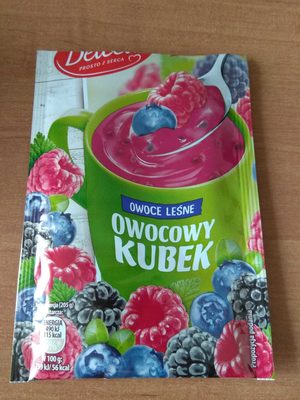
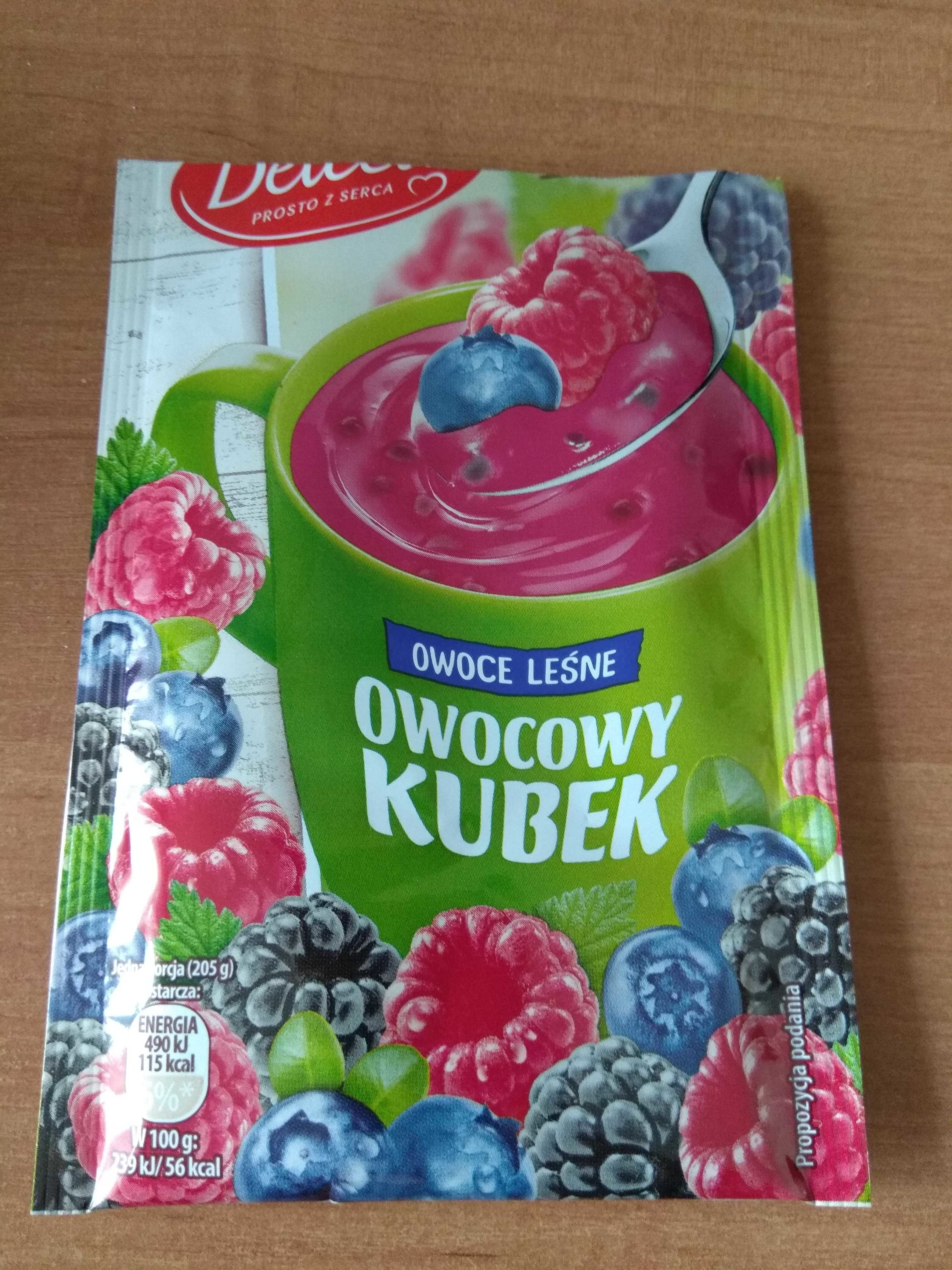
Kisiel Owocowy Kubek, owoce leśne - Delecta - 30 g
This product page is not complete. You can help to complete it by editing it and adding more data from the photos we have, or by taking more photos using the app for Android or iPhone/iPad. Thank you!
×
Barcode: 5900983000873 (EAN / EAN-13)
Quantity: 30 g
Packaging: da:C/PAP
Categories: pl:Kisiel
Countries where sold: Poland
Matching with your preferences
Health
Ingredients


Food processing
-

Ultra processed foods
Elements that indicate the product is in the 4 - Ultra processed food and drink products group:
- Additive: E163 - Anthocyanins
- Ingredient: Colour
- Ingredient: Flavouring
Food products are classified into 4 groups according to their degree of processing:
- Unprocessed or minimally processed foods
- Processed culinary ingredients
- Processed foods
- Ultra processed foods
The determination of the group is based on the category of the product and on the ingredients it contains.
Additives
Ingredients analysis
-

Palm oil free
No ingredients containing palm oil detected
-

Vegan status unknown
Unrecognized ingredients: Vitamin C
-

Vegetarian status unknown
Unrecognized ingredients: Vitamin C
-

Details of the analysis of the ingredients
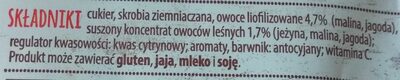
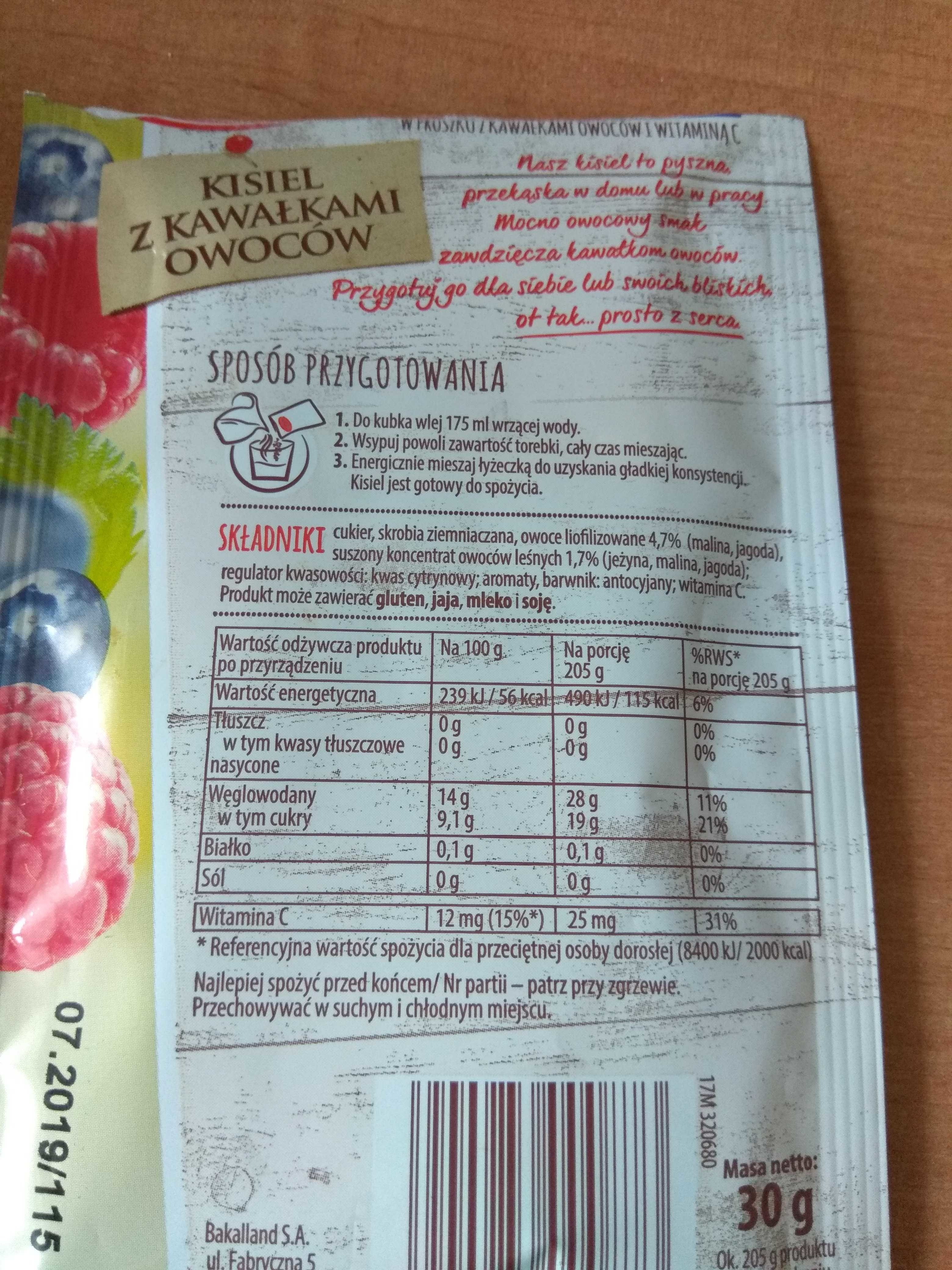
pl: cukier, skrobia ziemniaczana, owoce 4.7% (malina, jagoda), owoców leśnych 1.7% (jeżyna, malina, jagoda), regulator kwasowości (kwas cytrynowy), aromaty, barwnik (antocyjany), Witamina C- cukier -> en:sugar - vegan: yes - vegetarian: yes - ciqual_proxy_food_code: 31016 - percent_min: 40 - percent_max: 88.9
- skrobia ziemniaczana -> en:potato-starch - vegan: yes - vegetarian: yes - ciqual_proxy_food_code: 9510 - percent_min: 4.7 - percent_max: 46.8
- owoce -> en:fruit - vegan: yes - vegetarian: yes - percent_min: 4.7 - percent: 4.7 - percent_max: 4.7
- malina -> en:raspberry - vegan: yes - vegetarian: yes - ciqual_food_code: 13015 - percent_min: 2.35 - percent_max: 4.7
- jagoda -> en:bilberry - vegan: yes - vegetarian: yes - ciqual_food_code: 13028 - percent_min: 0 - percent_max: 2.35
- owoców leśnych -> en:forest-berries - vegan: yes - vegetarian: yes - percent_min: 1.7 - percent: 1.7 - percent_max: 1.7
- jeżyna -> en:blackberry - vegan: yes - vegetarian: yes - ciqual_food_code: 13029 - percent_min: 0.566666666666667 - percent_max: 1.7
- malina -> en:raspberry - vegan: yes - vegetarian: yes - ciqual_food_code: 13015 - percent_min: 0 - percent_max: 0.85
- jagoda -> en:bilberry - vegan: yes - vegetarian: yes - ciqual_food_code: 13028 - percent_min: 0 - percent_max: 0.566666666666667
- regulator kwasowości -> en:acidity-regulator - percent_min: 0 - percent_max: 1.7
- kwas cytrynowy -> en:e330 - vegan: yes - vegetarian: yes - percent_min: 0 - percent_max: 1.7
- aromaty -> en:flavouring - vegan: maybe - vegetarian: maybe - percent_min: 0 - percent_max: 1.7
- barwnik -> en:colour - percent_min: 0 - percent_max: 1.7
- antocyjany -> en:e163 - vegan: yes - vegetarian: yes - percent_min: 0 - percent_max: 1.7
- Witamina C -> en:vitamin-c - percent_min: 0 - percent_max: 1.7
Nutrition
-

Missing data to compute the Nutri-Score
Missing nutrition facts
⚠ ️The nutrition facts of the product must be specified in order to compute the Nutri-Score.Could you add the information needed to compute the Nutri-Score? Add nutrition facts
-

Nutrient levels
-

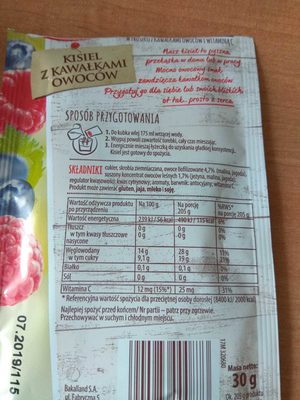
Sugars in moderate quantity (9.27%)
What you need to know- A high consumption of sugar can cause weight gain and tooth decay. It also augments the risk of type 2 diabetes and cardio-vascular diseases.
Recommendation: Limit the consumption of sugar and sugary drinks- Sugary drinks (such as sodas, fruit beverages, and fruit juices and nectars) should be limited as much as possible (no more than 1 glass a day).
- Choose products with lower sugar content and reduce the consumption of products with added sugars.
-

Environment
-

Eco-Score not computed - Unknown environmental impact
We could not compute the Eco-Score of this product as it is missing some data, could you help complete it?Could you add a precise product category so that we can compute the Eco-Score? Add a category
Packaging
-

Packaging with a low impact
-
Packaging parts
 (Cardboard)
-
Transportation
-

Origins of ingredients
Missing origins of ingredients information
⚠ ️ The origins of the ingredients of this product are not indicated.
If they are indicated on the packaging, you can modify the product sheet and add them.
If you are the manufacturer of this product, you can send us the information with our free platform for producers.Add the origins of ingredients for this product Add the origins of ingredients for this product

Data sources
Product added on by waistline-app
Last edit of product page on by arc2.
Product page also edited by karbonado, openfoodfacts-contributors, packbot, waistline.42d1e7af-6d3e-4c91-964e-a221a2b88759.