Help us inform millions of consumers around the world about what they eat
Please give to our 2026 Fundraiser
Your donations fund the day-to-day operations of our non-profit association:
-
keeping our database open & available to all,
- technical infrastructure (website/mobile app) & a small permanent team
-
remain independent of the food industry,
-
engage a community of committed citizens,
-
support the advancement of public health research.
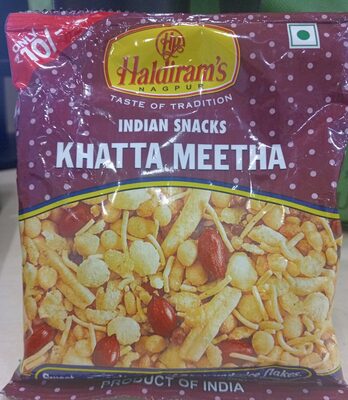
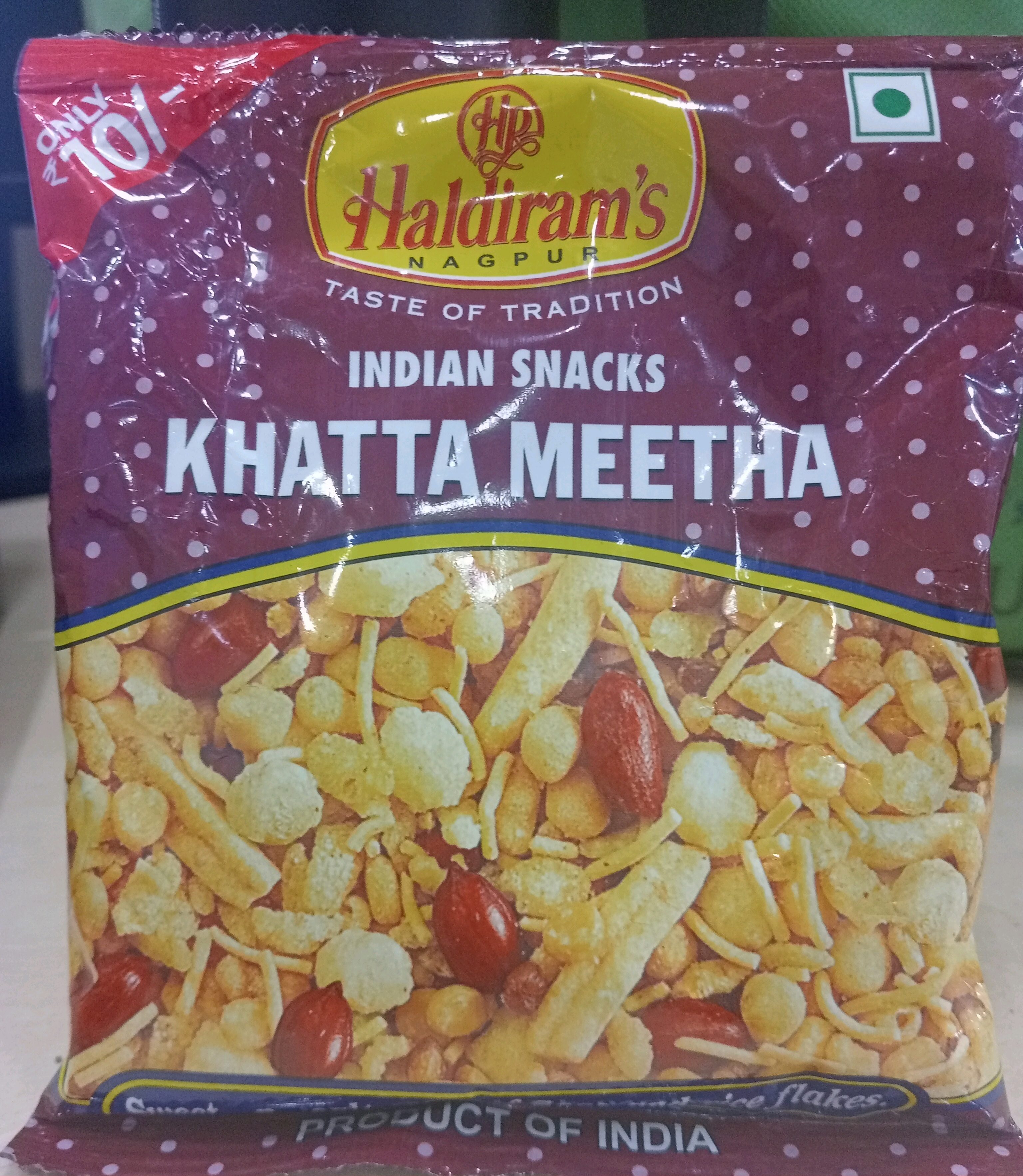
Haldiram khatta mitha – 50g
This product page is not complete. You can help to complete it by editing it and adding more data from the photos we have, or by taking more photos using the app for Android or iPhone/iPad. Thank you!
×
Barcode:
8904004401073(EAN / EAN-13)
Barcode:
8904004401073(EAN / EAN-13)
Quantity: 50g
Brands: haldiram
Categories: Snacks, Rice-flakes-and-peanut-based-snacks
Labels, certifications, awards:
Vegetarian, Green Dot India
Countries where sold: India
Matching with your preferences
Health
Nutrition
-
Nutri-Score D
Lower nutritional quality
⚠ ️Warning: the amount of fruits, vegetables and nuts is not specified on the label, it was estimated from the list of ingredients: 8-
Discover the new Nutri-Score!
The computation of the Nutri-Score is evolving to provide better recommendations based on the latest scientific evidence.
Main improvements:
- Better score for some fatty fish and oils rich in good fats
- Better score for whole products rich in fiber
- Worse score for products containing a lot of salt or sugar
- Worse score for red meat (compared to poultry)
-
What is the Nutri-Score?
The Nutri-Score is a logo on the overall nutritional quality of products.
The score from A to E is calculated based on nutrients and foods to favor (proteins, fiber, fruits, vegetables and legumes ...) and nutrients to limit (calories, saturated fat, sugars, salt). The score is calculated from the data of the nutrition facts table and the composition data (fruits, vegetables and legumes).
Negative points: 16/55
-
Energy
3/10 points (1272.73kJ)
Energy intakes above energy requirements are associated with increased risks of weight gain, overweight, obesity, and consequently risk of diet-related chronic diseases.
-
Sugar
3/15 points (13.1g)
A high consumption of sugar can cause weight gain and tooth decay. It also augments the risk of type 2 diabetes and cardio-vascular diseases.
-
Saturated fat
10/10 points (12.48g)
A high consumption of fat, especially saturated fats, can raise cholesterol, which increases the risk of heart diseases.
-
Salt
0/20 points (0g)
A high consumption of salt (or sodium) can cause raised blood pressure, which can increase the risk of heart disease and stroke.
Positive points: 1/10
-
Fiber
1/5 points (4.01g)
Consuming foods rich in fiber (especially whole grain foods) reduces the risks of aerodigestive cancers, cardiovascular diseases, obesity and diabetes.
-
Fruits, vegetables and legumes
0/5 points (8.6%)
Consuming foods rich in fruits, vegetables and legumes reduces the risks of aerodigestive cancers, cardiovascular diseases, obesity and diabetes.
-
Details of the calculation of the Nutri-Score
⚠ ️Warning: the amount of fruits, vegetables and nuts is not specified on the label, it was estimated from the list of ingredients: 8This product is not considered a beverage for the calculation of the Nutri-Score.
Points for proteins are not counted because the negative points greater than or equal to 11.
Nutritional score: 15 (16 - 1)
Nutri-Score: D
-
-
Nutrient levels
-
Fat in high quantity (29.2%)
What you need to know- A high consumption of fat, especially saturated fats, can raise cholesterol, which increases the risk of heart diseases.
Recommendation: Limit the consumption of fat and saturated fat- Choose products with lower fat and saturated fat content.
-
Saturated fat in high quantity (12.5%)
What you need to know- A high consumption of fat, especially saturated fats, can raise cholesterol, which increases the risk of heart diseases.
Recommendation: Limit the consumption of fat and saturated fat- Choose products with lower fat and saturated fat content.
-
Sugars in high quantity (13.1%)
What you need to know- A high consumption of sugar can cause weight gain and tooth decay. It also augments the risk of type 2 diabetes and cardio-vascular diseases.
Recommendation: Limit the consumption of sugar and sugary drinks- Sugary drinks (such as sodas, fruit beverages, and fruit juices and nectars) should be limited as much as possible (no more than 1 glass a day).
- Choose products with lower sugar content and reduce the consumption of products with added sugars.
-
Salt in low quantity (0%)
What you need to know- A high consumption of salt (or sodium) can cause raised blood pressure, which can increase the risk of heart disease and stroke.
- Many people who have high blood pressure do not know it, as there are often no symptoms.
- Most people consume too much salt (on average 9 to 12 grams per day), around twice the recommended maximum level of intake.
Recommendation: Limit the consumption of salt and salted food- Reduce the quantity of salt used when cooking, and don't salt again at the table.
- Limit the consumption of salty snacks and choose products with lower salt content.
-
-
Nutrition facts
Nutrition facts As sold
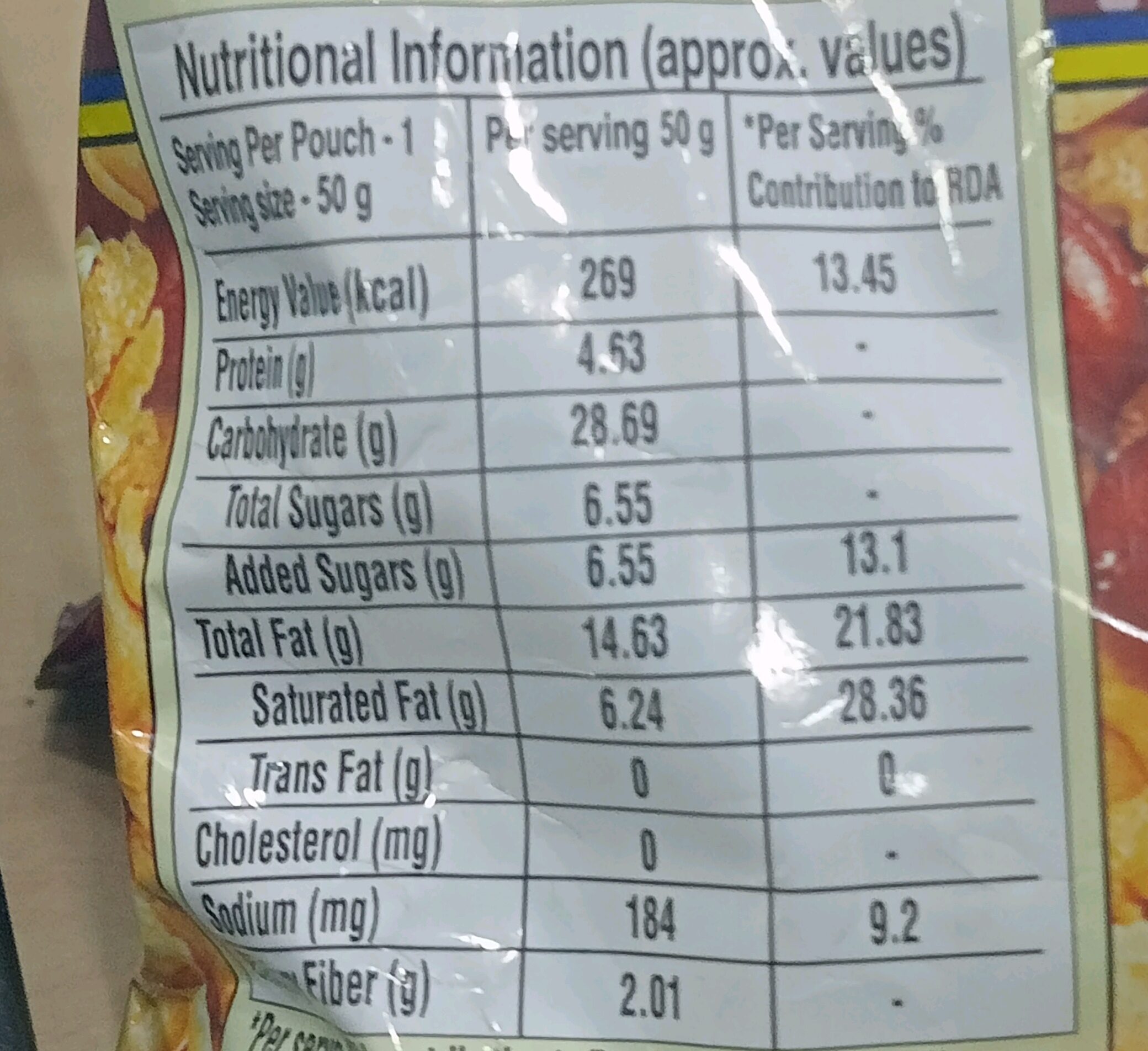
for 100 g / 100 mlCompared to: Snacks Energy ~ 1272.72546 kJ
(530 kcal)1,864.114 kj (445 kcal) (-32%) Fat 29.25 g 20.454 g (+43%) Saturated fat 12.48 g 8.313 g (+50%) Trans fat 0.1 g 0.024 g (+312%) Carbohydrates 0.05738 g 55.725 g (-100%) Sugars 13.1 g 28.167 g (-53%) Added sugars 12.33 g 21.219 g (-42%) Fiber 4.01 g 3.493 g (+15%) Proteins 9.26 g 6.416 g (+44%) Salt 0 g 0.534 g (-100%) Sodium 0 g 0.214 g (-100%) Alcohol 0 % vol 0.001 % vol (-100%) Fruits‚ vegetables‚ legumes ~ 8.55 % 1.708 % (+401%) -
Nutrition facts (Detailed data)
Nutrition facts As sold
for 100 g / 100 mlAs sold for 100 g (packaging) As sold for 100 g (estimate) Energy ~ 1272.72546 kJ
(530 kcal)? kcal
(530 kcal)? Fat 29.25 g 29.25 g ? Saturated fat 12.48 g 12.48 g ? Trans fat 0.1 g 0.1 g ? Carbohydrates 0.05738 g 0.05738 g ? Sugars 13.1 g 13.1 g ? Added sugars 12.33 g 12.33 g ~ 8.55 g Fiber 4.01 g 4.01 g ? Proteins 9.26 g 9.26 g ? Salt 0 g 0 g ? Sodium 0 g 0 g ? Alcohol 0 % vol 0 % vol ? Fruits‚ vegetables‚ legumes ~ 8.55 % ? ~ 8.55 %
-
Ingredients
-
25 ingredients
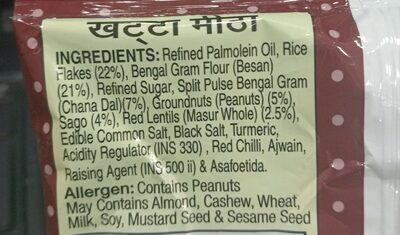
Refined Palmolein Oil, Rice Flakes (22%), Bengal Gram Flour (Besan) (21%), Refined Sugar, Split Pulse Bengal Gram (Chana Dal) (7%), Groundnuts (Peanuts) (5%). Sago (4%), Red Lentils (Masur Whole) (2.5%), Green peas, Iodised Salt, Black Salt, Turmeric, Acidity Regulator (INS 330), Red Chilli, Ajwain, Raising Agent (INS 500 ii) & Asafoetida. Allergen: Contains Peanuts May Contains Tree nuts, Wheat, Milk, Soy, Mustard Seed & Sesame SeedAllergens: Gluten, Milk, Peanuts, Sesame seeds, Soybeans-
Ingredient information
-
Refined palmolein oil: 40.0% (estimate)
-
Rice flakes: 22.0%
-
Bengal-gram-flour: 13.0% (estimate)
-
— Chickpea flour: 13.0% (estimate)
-
Sugar: 8.6% (estimate)
-
Split-pulse-bengal-gram: 8.6% (estimate)
-
— Chickpea: 8.6% (estimate)
-
Groundnuts: 6.0% (estimate)
-
Sago: 4.0%
-
Red lentils: < 2% (estimate)
-
— Masur-whole: < 2% (estimate)
-
Green peas: < 2% (estimate)
-
Iodised salt: < 2% (estimate)
-
Black salt: < 2% (estimate)
-
Turmeric: < 2% (estimate)
-
Acidity regulator: < 2% (estimate)
-
— E330: < 2% (estimate)
-
Red chili pepper: < 2% (estimate)
-
Ajwain: < 2% (estimate)
-
Raising agent: < 2% (estimate)
-
— E500ii: < 2% (estimate)
-
Asafoetida: < 2% (estimate)
-
May: < 2% (estimate)
-
Seed: < 2% (estimate)
-
Sesame seeds: < 2% (estimate)
-
-
-
Contains added sugars (12%)
Added sugars: Sugar
Quantity of added sugars: 12%Search for products in the same category without added sugars: SnacksWhat you need to know- A high consumption of sugar can cause weight gain and tooth decay. It also augments the risk of type 2 diabetes and cardio-vascular diseases.
Recommendation: Limit the consumption of sugar and sugary drinks- Sugary drinks (such as sodas, fruit beverages, and fruit juices and nectars) should be limited as much as possible (no more than 1 glass a day).
- Choose products with lower sugar content and reduce the consumption of products with added sugars.
-
Good for agricultural biodiversity
Contains neglected or underutilized crops: Chickpea, Chickpea, Lentils, Pea
Did you know?Since 1900, 75% of plant diversity has been lost as farmers around the world have abandoned local varieties for high-yielding varieties adapted to mass industrial processing. As a result, 60 % of human energy intake in the world comes from only 3 species: wheat, rice and corn.
Why it mattersThe lack of variety of crops makes our food supply more vulnerable to pests, diseases and climate change.
What you can doConsuming diverse cereals, legumes, vegetables and fruits contributes to:
- preserving neglected and underutilized species
- rural development and support of local farmers and companies
- preserving of diversified landscapes
- food security
- and your health!
Open Food Facts participates in the European project DIVINFOOD (funded from European Union’s Horizon 2020 research and innovation programme). DIVINFOOD aims to develop food chains that value under-utilised agrobiodiversity in order to act against the decline of biodiversity and to meet the growing expectations of consumers for healthy, local products that contribute to sustainable food systems.
Food processing
-
Processed foods
Elements that indicate the product is in the 3 - Processed foods group:
- Ingredient: Salt
- Ingredient: Starch
- Ingredient: Sugar
Food products are classified into 4 groups according to their degree of processing:
- Unprocessed or minimally processed foods
- Processed culinary ingredients
- Processed foods
- Ultra-processed foods
The determination of the group is based on the category of the product and on the ingredients it contains.
Additives
-
E330 - Citric acid
Citric acid is a natural organic acid found in citrus fruits such as lemons, oranges, and limes.
It is widely used in the food industry as a flavor enhancer, acidulant, and preservative due to its tart and refreshing taste.
Citric acid is safe for consumption when used in moderation and is considered a generally recognized as safe (GRAS) food additive by regulatory agencies worldwide.
-
E500 - Sodium carbonates
Sodium carbonates (E500) are compounds commonly used in food preparation as leavening agents, helping baked goods rise by releasing carbon dioxide when they interact with acids.
Often found in baking soda, they regulate the pH of food, preventing it from becoming too acidic or too alkaline. In the culinary world, sodium carbonates can also enhance the texture and structure of foods, such as noodles, by modifying the gluten network.
Generally recognized as safe, sodium carbonates are non-toxic when consumed in typical amounts found in food.
-
E500ii - Sodium hydrogen carbonate
Sodium hydrogen carbonate, also known as E500ii, is a food additive commonly used as a leavening agent.
When added to recipes, it releases carbon dioxide gas upon exposure to heat or acids, causing dough to rise and resulting in a light, fluffy texture in baked goods.
It is generally recognized as safe (GRAS) by regulatory authorities when used in appropriate quantities and poses no significant health risks when consumed in typical food applications.
Ingredients analysis
-
Palm oil
Ingredients that contain palm oil: Refined palmolein oil
-
Vegan status unknown
Unrecognized ingredients: Groundnuts, Masur-whole, Ajwain, MaySome ingredients could not be recognized.
We need your help!
You can help us recognize more ingredients and better analyze the list of ingredients for this product and others:
- Edit this product page to correct spelling mistakes in the ingredients list, and/or to remove ingredients in other languages and sentences that are not related to the ingredients.
- Add new entries, synonyms or translations to our multilingual lists of ingredients, ingredient processing methods, and labels.
If you would like to help, join the #ingredients channel on our Slack discussion space and/or learn about ingredients analysis on our wiki. Thank you!
-
Vegetarian
No non-vegetarian ingredients detected
Unrecognized ingredients: Groundnuts, Masur-whole, Ajwain, MaySome ingredients could not be recognized.
We need your help!
You can help us recognize more ingredients and better analyze the list of ingredients for this product and others:
- Edit this product page to correct spelling mistakes in the ingredients list, and/or to remove ingredients in other languages and sentences that are not related to the ingredients.
- Add new entries, synonyms or translations to our multilingual lists of ingredients, ingredient processing methods, and labels.
If you would like to help, join the #ingredients channel on our Slack discussion space and/or learn about ingredients analysis on our wiki. Thank you!
-
Details of the analysis of the ingredients
We need your help!
Some ingredients could not be recognized.
We need your help!
You can help us recognize more ingredients and better analyze the list of ingredients for this product and others:
- Edit this product page to correct spelling mistakes in the ingredients list, and/or to remove ingredients in other languages and sentences that are not related to the ingredients.
- Add new entries, synonyms or translations to our multilingual lists of ingredients, ingredient processing methods, and labels.
If you would like to help, join the #ingredients channel on our Slack discussion space and/or learn about ingredients analysis on our wiki. Thank you!
en: Refined Palmolein Oil, Rice Flakes 22%, Bengal Gram Flour (Besan), Sugar, Split Pulse Bengal Gram (Chana Dal), Groundnuts, Sago 4%, Red Lentils (Masur Whole), Green peas, Iodised Salt, Black Salt, Turmeric, Acidity Regulator (e330), Red Chilli, Ajwain, Raising Agent (e500ii), Asafoetida, May, Seed, Sesame SeedIngredient Taxonomy ID vegan vegetarian palm_oil ciqual ciqual_proxy percent min max origin labels Refined Palmolein Oil en:refined-palmolein-oil yes yes yes 16129 40.0 22.0 58.0 Rice Flakes en:rice-flakes yes yes 9100 22.0 22.0 22.0 Bengal Gram Flour en:bengal-gram-flour 13.0 4.0 22.0 Besan en:chickpea-flour yes yes 9580 13.0 4.0 22.0 Sugar en:sugar maybe yes 31016 8.6 4.0 13.1 Split Pulse Bengal Gram en:split-pulse-bengal-gram 8.6 4.0 13.1 Chana Dal en:chickpea yes yes 20532 8.6 4.0 13.1 Groundnuts en:groundnuts 6.0 4.0 12.0 Sago en:sago yes yes 9510 4.0 4.0 4.0 Red Lentils en:red-lentils yes yes 20535 0.0 0.0 4.0 Masur Whole en:masur-whole 0.0 0.0 4.0 Green peas en:green-peas yes yes 0.0 0.0 4.0 Iodised Salt en:iodised-salt yes yes 11058 0.0 0.0 0.0 Black Salt en:black-salt yes yes 11058 0.0 0.0 0.0 Turmeric en:turmeric yes yes 11089 0.0 0.0 0.0 Acidity Regulator en:acidity-regulator 0.0 0.0 0.0 e330 en:e330 yes yes 0.0 0.0 0.0 Red Chilli en:red-chili-pepper yes yes 20151 0.0 0.0 0.0 Ajwain en:ajwain 0.0 0.0 0.0 Raising Agent en:raising-agent 0.0 0.0 0.0 e500ii en:e500ii yes yes 0.0 0.0 0.0 Asafoetida en:asafoetida yes yes 0.0 0.0 0.0 May en:may 0.0 0.0 0.0 Seed en:seed yes yes 0.0 0.0 0.0 Sesame Seed en:sesame-seeds yes yes 15010 0.0 0.0 0.0
Environment
-
Green-Score not computed
Missing a precise category
We could not compute the Green-Score of this product as it is missing some data, could you help complete it?The category we have for this product is not precise enough to compute the Green-Score. Could you add a more precise product category?
Packaging
-
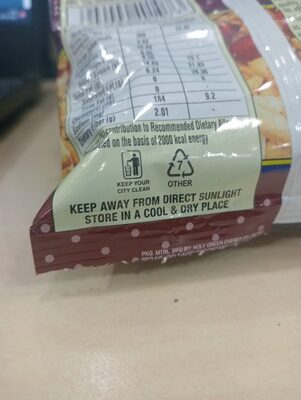
Missing packaging information for this product
⚠ ️ The information about the packaging of this product is not filled in.Take a photo of the recycling information
Transportation
-
Origins of ingredients
Missing origins of ingredients information
⚠ ️ The origins of the ingredients of this product are not indicated.
If they are indicated on the packaging, you can modify the product sheet and add them.
If you are the manufacturer of this product, you can send us the information with our free platform for producers.Add the origins of ingredients for this product
Threatened species
-
Contains palm oil
Drives deforestation and threatens species such as the orangutan
Tropical forests in Asia, Africa and Latin America are destroyed to create and expand oil palm tree plantations. The deforestation contributes to climate change, and it endangers species such as the orangutan, the pigmy elephant and the Sumatran rhino.

Report a problem
-
Incomplete or incorrect information?
Category, labels, ingredients, allergens, nutritional information, photos etc.
If the information does not match the information on the packaging, you can complete or correct it. Thank you! Open Food Facts is a collaborative database, and every contribution is useful for all.If you want to report vandalism, inappropriate content or erroneous data you can't fix yourself, report it to our moderators team.
Data sources
Product added on by smoothie-app
Last edit of product page on by foodless.
Product page also edited by isabel626, renuka, worldtaste.