Help us inform millions of consumers around the world about what they eat

group photo donation 2024
open food facts logo

Please give to our 2025 Fundraiser

Your donations fund the day-to-day operations of our non-profit association:

  • keeping our database open & available to all,
    • technical infrastructure (website/mobile app) & a small permanent team
  • remain independent of the food industry,

  • engage a community of committed citizens,

  • support the advancement of public health research.

Each donation counts! We appreciate your support in bringing further food transparency in the world.

arrow_upward

Smoked country brand sausage with cheddar cheese

Smoked country brand sausage with cheddar cheese

This product page is not complete. You can help to complete it by editing it and adding more data from the photos we have, or by taking more photos using the app for Android or iPhone/iPad. Thank you! ×

Barcode:
0041130592461(EAN / EAN-13) 041130592461 (UPC / UPC-A)

Brand owner: Supervalu, Inc.

Categories: Meats and their products, Meats, Prepared meats, Sausages

Countries where sold: United States

Matching with your preferences

Health

Nutrition

  • icon

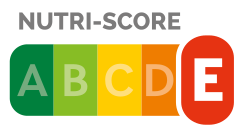
    Nutri-Score E

    Lower nutritional quality
    ⚠ ️Warning: the amount of fiber is not specified, their possible positive contribution to the grade could not be taken into account.
    ⚠ ️Warning: the amount of fruits, vegetables and nuts is not specified on the label, it was estimated from the list of ingredients: 0
    • icon

      Discover the new Nutri-Score!


      The computation of the Nutri-Score is evolving to provide better recommendations based on the latest scientific evidence.

      Main improvements:

      • Better score for some fatty fish and oils rich in good fats
      • Better score for whole products rich in fiber
      • Worse score for products containing a lot of salt or sugar
      • Worse score for red meat (compared to poultry)
    • icon

      What is the Nutri-Score?


      The Nutri-Score is a logo on the overall nutritional quality of products.

      The score from A to E is calculated based on nutrients and foods to favor (proteins, fiber, fruits, vegetables and legumes ...) and nutrients to limit (calories, saturated fat, sugars, salt). The score is calculated from the data of the nutrition facts table and the composition data (fruits, vegetables and legumes).

    icon

    Negative points: 26/55

    • icon

      Energy

      3/10 points (1197kJ)

      Energy intakes above energy requirements are associated with increased risks of weight gain, overweight, obesity, and consequently risk of diet-related chronic diseases.

    • icon

      Sugar

      0/15 points (1.79g)

      A high consumption of sugar can cause weight gain and tooth decay. It also augments the risk of type 2 diabetes and cardio-vascular diseases.

    • icon

      Salt

      15/20 points (3.12g)

      A high consumption of salt (or sodium) can cause raised blood pressure, which can increase the risk of heart disease and stroke.

    icon

    Positive points: 0/10

    • icon

      Fiber

      0/5 points (unknown)

      Consuming foods rich in fiber (especially whole grain foods) reduces the risks of aerodigestive cancers, cardiovascular diseases, obesity and diabetes.

    • icon

      Details of the calculation of the Nutri-Score


      ⚠ ️Warning: the amount of fiber is not specified, their possible positive contribution to the grade could not be taken into account.
      ⚠ ️Warning: the amount of fruits, vegetables and nuts is not specified on the label, it was estimated from the list of ingredients: 0

      This product is not considered a beverage for the calculation of the Nutri-Score.

      This product is considered to be a red meat product for the calculation of the Nutri-Score.

      Points for proteins are not counted because the negative points greater than or equal to 11.

      Nutritional score: 26 (26 - 0)

      Nutri-Score: E

  • icon

    Nutrition facts


    Nutrition facts As sold
    for 100 g / 100 ml
    As sold
    per serving (2 ONZ (56 g))
    Compared to: Sausages
    Energy 1,197 kj
    (286 kcal)
    670 kj
    (160 kcal)
    +8%
    Fat 21.43 g 12 g -1%
    Saturated fat 8.93 g 5 g +11%
    Trans fat 0 g 0 g -100%
    Cholesterol 80 mg 44.8 mg +17%
    Carbohydrates 3.57 g 2 g +65%
    Sugars 1.79 g 1 g +102%
    Fiber ? ?
    Proteins 19.64 g 11 g +28%
    Salt 3.125 g 1.75 g +47%
    Vitamin A 53.7 µg 30.1 µg +68%
    Calcium 107 mg 59.9 mg +282%
    Iron 1.29 mg 0.722 mg +13%
    Fruits‚ vegetables‚ nuts and rapeseed‚ walnut and olive oils (estimate from ingredients list analysis) 0 % 0 %
Serving size: 2 ONZ (56 g)

Ingredients

  • icon

    31 ingredients


    Pork, beef, water, pasteurized processed cheddar cheese (cheddar cheese [cultured milk, salt, enzymes], water, cream, sodium phosphates, salt beta carotene, powdered cellulose [to prevent caking], potassium sorbate and natamycin [preservative]), seasoning (salt, hydrolyzed soy flour, corn syrup solids, whey protein, dextrose, spices, sodium acetate, monosodium glutamate, sodium diacetate, sodium erythorbate), cure (salt, sodium nitrite).
    Allergens: Beef, Milk, Pork
    • Ingredient information


      • Pork: 58.3% (estimate)


      • Beef: 20.8% (estimate)


      • Water: 10.4% (estimate)


      • Pasteurized-processed-cheddar-cheese: 5.2% (estimate)


      • — Cheddar: 2.6% (estimate)


      • —— Soured milk: < 2% (estimate)


      • —— Salt: < 2% (estimate)


      • —— Enzyme: < 2% (estimate)


      • — Water: < 2% (estimate)


      • — Cream: < 2% (estimate)


      • — E339: < 2% (estimate)


      • — Salt-beta-carotene: < 2% (estimate)


      • — E460ii: < 2% (estimate)


      • —— Anti-caking agent: < 2% (estimate)


      • — E202: < 2% (estimate)


      • — E235: < 2% (estimate)


      • —— Preservative: < 2% (estimate)


      • Coating: 2.6% (estimate)


      • — Salt: < 2% (estimate)


      • — Hydrolyzed-soy-flour: < 2% (estimate)


      • — Corn syrup solids: < 2% (estimate)


      • — Whey protein: < 2% (estimate)


      • — Dextrose: < 2% (estimate)


      • — Spice: < 2% (estimate)


      • — E262i: < 2% (estimate)


      • — E621: < 2% (estimate)


        Monosodium glutamate: Monosodium glutamate -MSG, also known as sodium glutamate- is the sodium salt of glutamic acid, one of the most abundant naturally occurring non-essential amino acids. Glutamic acid is found naturally in tomatoes, grapes, cheese, mushrooms and other foods.MSG is used in the food industry as a flavor enhancer with an umami taste that intensifies the meaty, savory flavor of food, as naturally occurring glutamate does in foods such as stews and meat soups. It was first prepared in 1908 by Japanese biochemist Kikunae Ikeda, who was trying to isolate and duplicate the savory taste of kombu, an edible seaweed used as a base for many Japanese soups. MSG as a flavor enhancer balances, blends, and rounds the perception of other tastes.The U.S. Food and Drug Administration has given MSG its generally recognized as safe -GRAS- designation. A popular belief is that large doses of MSG can cause headaches and other feelings of discomfort, known as "Chinese restaurant syndrome," but double-blind tests fail to find evidence of such a reaction. The European Union classifies it as a food additive permitted in certain foods and subject to quantitative limits. MSG has the HS code 29224220 and the E number E621.
        Source: Wikipedia
      • — E262ii: < 2% (estimate)


      • — E316: < 2% (estimate)


      • Cure: 2.6% (estimate)


      • — Salt: < 2% (estimate)


      • — E250: < 2% (estimate)


  • icon

    Contains added sugars (~ 0%)

    Added sugars: Corn syrup solids, Dextrose
    Estimated quantity of added sugars in ingredients: 0%
    Search for products in the same category without added sugars: Sausages
    What you need to know
    • A high consumption of sugar can cause weight gain and tooth decay. It also augments the risk of type 2 diabetes and cardio-vascular diseases.

    Recommendation: Limit the consumption of sugar and sugary drinks
    • Sugary drinks (such as sodas, fruit beverages, and fruit juices and nectars) should be limited as much as possible (no more than 1 glass a day).
    • Choose products with lower sugar content and reduce the consumption of products with added sugars.

Food processing

Additives

  • E202 - Potassium sorbate


    Potassium sorbate (E202) is a synthetic food preservative commonly used to extend the shelf life of various food products.

    It works by inhibiting the growth of molds, yeast, and some bacteria, preventing spoilage. When added to foods, it helps maintain their freshness and quality.

    Some studies have shown that when combined with nitrites, potassium sorbate have genotoxic activity in vitro. However, potassium sorbate is generally recognized as safe (GRAS) by regulatory authorities.

  • E235 - Natamycin


    Natamycin: Natamycin, also known as pimaricin, is an antifungal medication used to treat fungal infections around the eye. This includes infections of the eyelids, conjunctiva, and cornea. It is used as eyedrops. Natamycin is also used in the food industry as a preservative.Allergic reactions may occur. It is unclear if medical use during pregnancy or breastfeeding is safe. It is in the macrolide and polyene families of medications. It results in fungal death by altering the cell membrane.Natamycin was discovered in 1955 and approved for medical use in the United States in 1978. It is on the World Health Organization's List of Essential Medicines, the most effective and safe medicines needed in a health system. The wholesale cost in the developing world is between US$92.90 and 126.72 per 5-ml bottle as of 2015. It is produced by fermentation of the bacterium Streptomyces natalensis.
    Source: Wikipedia
  • E250 - Sodium nitrite


    Sodium nitrite (E250) is a salt used for curing and preserving meat products.

    It plays a critical role in preventing the growth of Clostridium botulinum, the bacterium responsible for botulism, in cured meats like bacon, ham, and sausages. It also provides the characteristic pink color and flavor.

    However, nitrites can react with amines in the stomach to form nitrosamines, which are potent carcinogens. High intake of processed meats containing nitrites is associated with an increased risk of colorectal cancer. Regulatory bodies have set strict limits on its use in food.

  • E262 - Sodium acetates


    Sodium acetate: Sodium acetate, CH3COONa, also abbreviated NaOAc, is the sodium salt of acetic acid. This colorless deliquescent salt has a wide range of uses.
    Source: Wikipedia
  • E262i - Sodium acetate


    Sodium acetate: Sodium acetate, CH3COONa, also abbreviated NaOAc, is the sodium salt of acetic acid. This colorless deliquescent salt has a wide range of uses.
    Source: Wikipedia
  • E262ii - Sodium diacetate


    Sodium acetate: Sodium acetate, CH3COONa, also abbreviated NaOAc, is the sodium salt of acetic acid. This colorless deliquescent salt has a wide range of uses.
    Source: Wikipedia
  • E316 - Sodium erythorbate


    Sodium erythorbate: Sodium erythorbate -C6H7NaO6- is a food additive used predominantly in meats, poultry, and soft drinks. Chemically, it is the sodium salt of erythorbic acid. When used in processed meat such as hot dogs and beef sticks, it increases the rate at which nitrite reduces to nitric oxide, thus facilitating a faster cure and retaining the pink coloring. As an antioxidant structurally related to vitamin C, it helps improve flavor stability and prevents the formation of carcinogenic nitrosamines. When used as a food additive, its E number is E316. The use of erythorbic acid and sodium erythorbate as a food preservative has increased greatly since the U.S. Food and Drug Administration banned the use of sulfites as preservatives in foods intended to be eaten fresh -such as ingredients for fresh salads- and as food processors have responded to the fact that some people are allergic to sulfites. It can also be found in bologna, and is occasionally used in beverages, baked goods, and potato salad.Sodium erythorbate is produced from sugars derived from different sources, such as beets, sugar cane, and corn. An urban myth claims that sodium erythorbate is made from ground earthworms; however, there is no truth to the myth. It is thought that the genesis of the legend comes from the similarity of the chemical name to the words earthworm and bait.Alternative applications include the development of additives that could be utilized as anti-oxidants in general. For instance, this substance has been implemented in the development of corrosion inhibitors for metals and it has been implemented in active packaging.Sodium erythorbate is soluble in water. The pH of the aqueous solution of the sodium salt is between 5 and 6. A 10% solution, made from commercial grade sodium erythorbate, may have a pH of 7.2 to 7.9. In its dry, crystalline state it is nonreactive. But, when in solution with water it readily reacts with atmospheric oxygen and other oxidizing agents, which makes it a valuable antioxidant.
    Source: Wikipedia
  • E460 - Cellulose


    Cellulose: Cellulose is an organic compound with the formula -C6H10O5-n, a polysaccharide consisting of a linear chain of several hundred to many thousands of β-1→4- linked D-glucose units. Cellulose is an important structural component of the primary cell wall of green plants, many forms of algae and the oomycetes. Some species of bacteria secrete it to form biofilms. Cellulose is the most abundant organic polymer on Earth. The cellulose content of cotton fiber is 90%, that of wood is 40–50%, and that of dried hemp is approximately 57%.Cellulose is mainly used to produce paperboard and paper. Smaller quantities are converted into a wide variety of derivative products such as cellophane and rayon. Conversion of cellulose from energy crops into biofuels such as cellulosic ethanol is under development as a renewable fuel source. Cellulose for industrial use is mainly obtained from wood pulp and cotton.Some animals, particularly ruminants and termites, can digest cellulose with the help of symbiotic micro-organisms that live in their guts, such as Trichonympha. In human nutrition, cellulose is a non-digestible constituent of insoluble dietary fiber, acting as a hydrophilic bulking agent for feces and potentially aiding in defecation.
    Source: Wikipedia
  • E460ii - Powdered cellulose


    Cellulose: Cellulose is an organic compound with the formula -C6H10O5-n, a polysaccharide consisting of a linear chain of several hundred to many thousands of β-1→4- linked D-glucose units. Cellulose is an important structural component of the primary cell wall of green plants, many forms of algae and the oomycetes. Some species of bacteria secrete it to form biofilms. Cellulose is the most abundant organic polymer on Earth. The cellulose content of cotton fiber is 90%, that of wood is 40–50%, and that of dried hemp is approximately 57%.Cellulose is mainly used to produce paperboard and paper. Smaller quantities are converted into a wide variety of derivative products such as cellophane and rayon. Conversion of cellulose from energy crops into biofuels such as cellulosic ethanol is under development as a renewable fuel source. Cellulose for industrial use is mainly obtained from wood pulp and cotton.Some animals, particularly ruminants and termites, can digest cellulose with the help of symbiotic micro-organisms that live in their guts, such as Trichonympha. In human nutrition, cellulose is a non-digestible constituent of insoluble dietary fiber, acting as a hydrophilic bulking agent for feces and potentially aiding in defecation.
    Source: Wikipedia
  • E621 - Monosodium glutamate


    Monosodium glutamate (MSG), or E621, is the sodium salt of glutamic acid, an amino acid found naturally in many foods.

    It is widely used as a flavor enhancer to provide an "umami" or savory taste to a variety of processed foods, including soups, snack chips, and frozen meals.

    MSG is generally recognized as safe (GRAS) by food authorities. However, some people report sensitivity to MSG, experiencing short-term symptoms like headaches and flushing, though scientific studies have not shown a consistent link.

Ingredients analysis

  • icon

    Palm oil content unknown


    Unrecognized ingredients: Pasteurized-processed-cheddar-cheese, Salt-beta-carotene, Hydrolyzed-soy-flour, Cure

    Some ingredients could not be recognized.

    We need your help!

    You can help us recognize more ingredients and better analyze the list of ingredients for this product and others:

    • Edit this product page to correct spelling mistakes in the ingredients list, and/or to remove ingredients in other languages and sentences that are not related to the ingredients.
    • Add new entries, synonyms or translations to our multilingual lists of ingredients, ingredient processing methods, and labels.

    If you would like to help, join the #ingredients channel on our Slack discussion space and/or learn about ingredients analysis on our wiki. Thank you!

  • icon

    Non-vegan


    Non-vegan ingredients: Pork, Beef, Cheddar, Soured milk, Cream, Whey protein

    Some ingredients could not be recognized.

    We need your help!

    You can help us recognize more ingredients and better analyze the list of ingredients for this product and others:

    • Edit this product page to correct spelling mistakes in the ingredients list, and/or to remove ingredients in other languages and sentences that are not related to the ingredients.
    • Add new entries, synonyms or translations to our multilingual lists of ingredients, ingredient processing methods, and labels.

    If you would like to help, join the #ingredients channel on our Slack discussion space and/or learn about ingredients analysis on our wiki. Thank you!

  • icon

    Non-vegetarian


    Non-vegetarian ingredients: Pork, Beef

    Some ingredients could not be recognized.

    We need your help!

    You can help us recognize more ingredients and better analyze the list of ingredients for this product and others:

    • Edit this product page to correct spelling mistakes in the ingredients list, and/or to remove ingredients in other languages and sentences that are not related to the ingredients.
    • Add new entries, synonyms or translations to our multilingual lists of ingredients, ingredient processing methods, and labels.

    If you would like to help, join the #ingredients channel on our Slack discussion space and/or learn about ingredients analysis on our wiki. Thank you!

The analysis is based solely on the ingredients listed and does not take into account processing methods.
  • icon

    Details of the analysis of the ingredients

    We need your help!

    Some ingredients could not be recognized.

    We need your help!

    You can help us recognize more ingredients and better analyze the list of ingredients for this product and others:

    • Edit this product page to correct spelling mistakes in the ingredients list, and/or to remove ingredients in other languages and sentences that are not related to the ingredients.
    • Add new entries, synonyms or translations to our multilingual lists of ingredients, ingredient processing methods, and labels.

    If you would like to help, join the #ingredients channel on our Slack discussion space and/or learn about ingredients analysis on our wiki. Thank you!

    en: Pork, beef, water, pasteurized processed cheddar cheese (cheddar cheese (cultured milk, salt, enzymes), water, cream, sodium phosphates, salt beta carotene, powdered cellulose (to prevent caking), potassium sorbate, natamycin (preservative)), seasoning (salt, hydrolyzed soy flour, corn syrup solids, whey protein, dextrose, spices, sodium acetate, monosodium glutamate, sodium diacetate, sodium erythorbate), cure (salt, sodium nitrite)
    1. Pork -> en:pork – vegan: no – vegetarian: no – percent_min: 16.6666666666667 – percent_max: 100
    2. beef -> en:beef – vegan: no – vegetarian: no – percent_min: 0 – percent_max: 50
    3. water -> en:water – vegan: yes – vegetarian: yes – ciqual_food_code: 18066 – percent_min: 0 – percent_max: 33.3333333333333
    4. pasteurized processed cheddar cheese -> en:pasteurized-processed-cheddar-cheese – percent_min: 0 – percent_max: 25
      1. cheddar cheese -> en:cheddar – vegan: no – vegetarian: maybe – ciqual_food_code: 12726 – percent_min: 0 – percent_max: 25
        1. cultured milk -> en:soured-milk – vegan: no – vegetarian: yes – percent_min: 0 – percent_max: 25
        2. salt -> en:salt – vegan: yes – vegetarian: yes – ciqual_food_code: 11058 – percent_min: 0 – percent_max: 3.125
        3. enzymes -> en:enzyme – vegan: maybe – vegetarian: maybe – percent_min: 0 – percent_max: 3.125
      2. water -> en:water – vegan: yes – vegetarian: yes – ciqual_food_code: 18066 – percent_min: 0 – percent_max: 12.5
      3. cream -> en:cream – vegan: no – vegetarian: yes – ciqual_food_code: 19402 – percent_min: 0 – percent_max: 8.33333333333333
      4. sodium phosphates -> en:e339 – vegan: yes – vegetarian: yes – percent_min: 0 – percent_max: 6.25
      5. salt beta carotene -> en:salt-beta-carotene – percent_min: 0 – percent_max: 5
      6. powdered cellulose -> en:e460ii – vegan: yes – vegetarian: yes – percent_min: 0 – percent_max: 4.16666666666667
        1. to prevent caking -> en:anti-caking-agent – percent_min: 0 – percent_max: 4.16666666666667
      7. potassium sorbate -> en:e202 – vegan: yes – vegetarian: yes – percent_min: 0 – percent_max: 3.57142857142857
      8. natamycin -> en:e235 – vegan: yes – vegetarian: yes – percent_min: 0 – percent_max: 3.125
        1. preservative -> en:preservative – percent_min: 0 – percent_max: 3.125
    5. seasoning -> en:coating – vegan: maybe – vegetarian: maybe – percent_min: 0 – percent_max: 20
      1. salt -> en:salt – vegan: yes – vegetarian: yes – ciqual_food_code: 11058 – percent_min: 0 – percent_max: 3.125
      2. hydrolyzed soy flour -> en:hydrolyzed-soy-flour – percent_min: 0 – percent_max: 3.125
      3. corn syrup solids -> en:corn-syrup-solids – vegan: yes – vegetarian: yes – ciqual_proxy_food_code: 31089 – percent_min: 0 – percent_max: 3.125
      4. whey protein -> en:whey-protein – vegan: no – vegetarian: yes – percent_min: 0 – percent_max: 3.125
      5. dextrose -> en:dextrose – vegan: yes – vegetarian: yes – ciqual_proxy_food_code: 31016 – percent_min: 0 – percent_max: 3.125
      6. spices -> en:spice – vegan: yes – vegetarian: yes – percent_min: 0 – percent_max: 3.125
      7. sodium acetate -> en:e262i – vegan: yes – vegetarian: yes – percent_min: 0 – percent_max: 2.85714285714286
      8. monosodium glutamate -> en:e621 – vegan: yes – vegetarian: yes – percent_min: 0 – percent_max: 2.5
      9. sodium diacetate -> en:e262ii – vegan: yes – vegetarian: yes – percent_min: 0 – percent_max: 2.22222222222222
      10. sodium erythorbate -> en:e316 – vegan: yes – vegetarian: yes – percent_min: 0 – percent_max: 2
    6. cure -> en:cure – percent_min: 0 – percent_max: 6.25
      1. salt -> en:salt – vegan: yes – vegetarian: yes – ciqual_food_code: 11058 – percent_min: 0 – percent_max: 3.125
      2. sodium nitrite -> en:e250 – vegan: yes – vegetarian: yes – percent_min: 0 – percent_max: 3.125

Environment

Packaging

Transportation

Report a problem

Data sources

Product added on by org-database-usda
Last edit of product page on by org-database-usda.

If the data is incomplete or incorrect, you can complete or correct it by editing this page.